
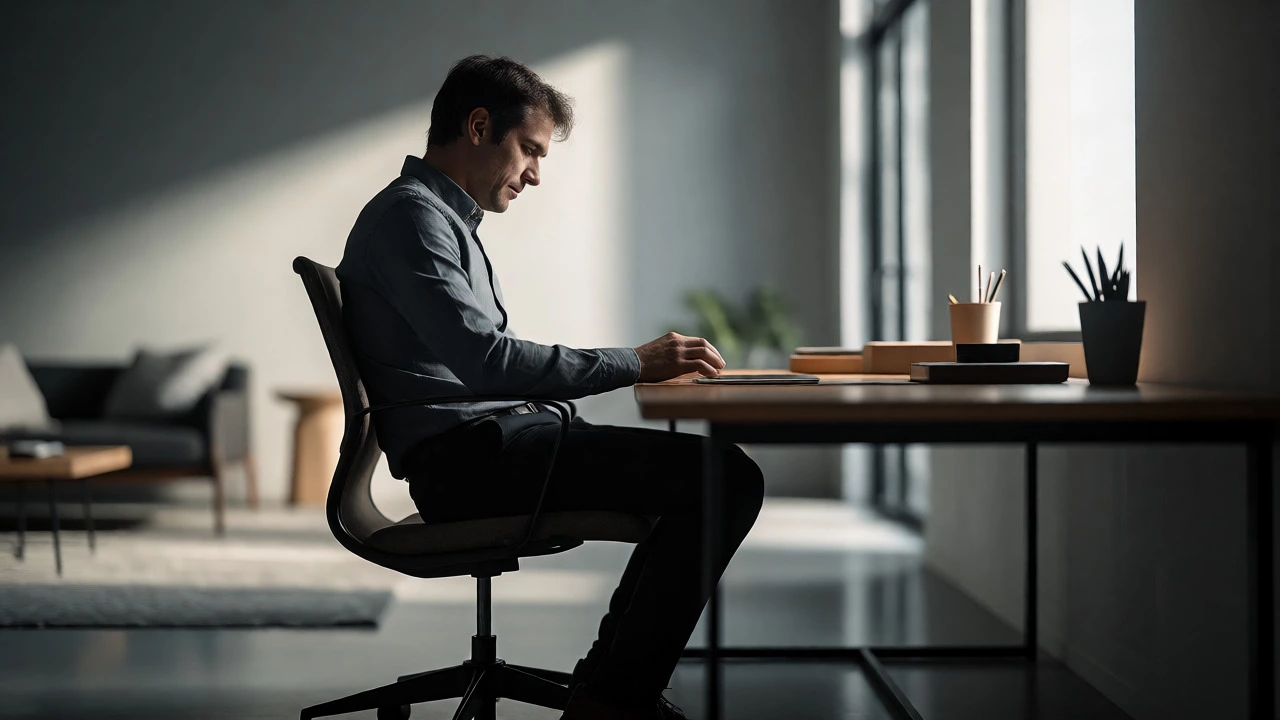
Standing Desk Ratio Calculator
Find the balance between sitting and standing to avoid back strain while boosting energy. Based on ergonomic best practices.
Why This Matters
Static positions (sitting or standing) cause fatigue in different muscle groups. The ideal approach is dynamic movement. Use this calculator to plan when to switch. Remember: Pain is a signal to change position, not push through.
You sit for eight hours a day. Then you drive home. Then you eat dinner at the table. By the time you relax on the sofa, your spine has been compressed into a shape it was never designed to hold. The standing desk craze arrived as a rebellion against this sedentary default. But are these expensive pieces of furniture actually worth the investment, or just another piece of office decor that gathers dust?
The short answer is nuanced. A standing desk is not a magic cure for back pain, nor is it a mandatory upgrade for every professional. However, when used correctly, it offers tangible benefits for circulation, focus, and long-term spinal health. The key lies not in standing all day, but in how you integrate movement into your workflow.
The Reality Behind the Hype
Let’s strip away the marketing gloss. Studies often cited in favor of standing desks show reduced lower back pain and improved energy levels. But many of these studies suffer from small sample sizes or short durations. What we do know with certainty is that static sitting-whether in a chair or while standing still-is harmful. The human body craves variation.
If you buy a standing desk and stand rigidly for six hours, you will likely develop foot pain, varicose veins, or knee strain. The benefit comes from alternating between sitting and standing. Think of it as an ergonomic tool for movement, not a replacement for a chair.
Health Benefits: What You Actually Gain
The primary advantage is metabolic. When you stand, your leg muscles engage slightly more than when seated. This subtle activation helps regulate blood sugar levels after meals. For professionals who eat lunch at their desks, this can prevent the mid-afternoon slump.
There is also the psychological aspect. Many users report feeling more alert and ready to tackle tasks when standing. It feels active. Sitting feels passive. If your work requires high-energy brainstorming or quick responses, standing can provide that necessary edge. Conversely, if you need deep, sustained concentration, sitting might allow you to settle into a flow state more easily.
| Metric | Sitting | Standing |
|---|---|---|
| Calorie Burn (per hour) | ~80 kcal | ~100-120 kcal |
| Spinal Load | High compression on discs | Neutral alignment if correct height |
| Fatigue Point | Lower back stiffness | Foot and calf fatigue |
| Best For | Deep reading, writing | Calls, meetings, creative bursts |
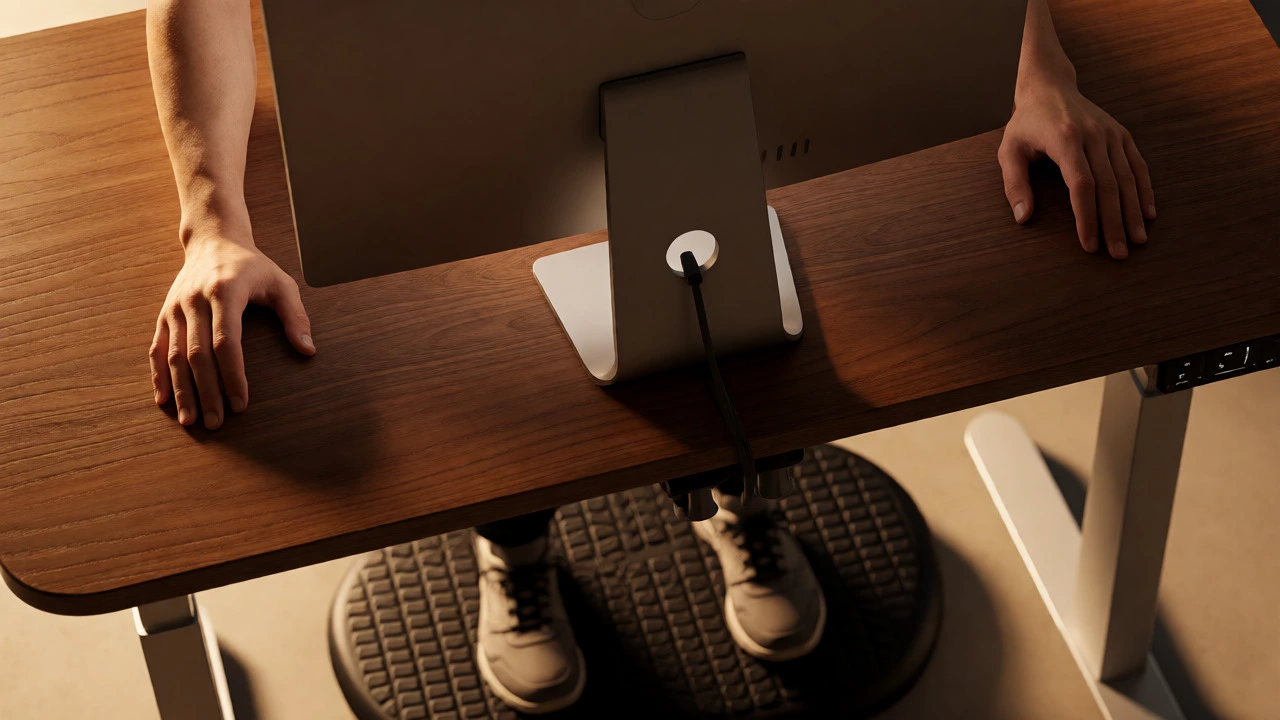
Ergonomics: Getting the Setup Right
A poorly adjusted standing desk is worse than no desk at all. If your monitor is too low, you will hunch forward, negating any postural benefit. If your keyboard is too high, your shoulders will creep up toward your ears, causing tension headaches.
Follow these rules for a gentleman’s setup:
- Monitor Height: The top of your screen should be at or slightly below eye level. You should look straight ahead, not down.
- Elbow Position: Keep your elbows at a 90-degree angle. Your forearms should rest parallel to the floor.
- Screen Distance: An arm’s length away. You shouldn’t have to lean forward to read fine print.
- Anti-Fatigue Mat: Essential. Hard floors punish feet. A high-quality mat provides cushioning and encourages micro-movements.
The Cost-Benefit Analysis
Quality standing desks range from £300 to over £1,500. Is it worth it? Consider the alternative. Poor posture leads to chronic pain, which leads to physiotherapy, chiropractic visits, and lost productivity. If a desk saves you one week of sick leave per year, it pays for itself quickly.
However, beware of cheap mechanisms. Electric motors fail. Manual cranks break. Look for brands with solid warranties and dual-motor systems for stability. A wobbly desk distracts you; a stable one fades into the background.

Who Should Buy One?
You are a good candidate if:
- You already experience mild lower back discomfort.
- You tend to slouch during long calls.
- You find yourself restless in the afternoon.
- You have the discipline to switch positions regularly.
You might skip it if:
- You have existing circulatory issues like severe varicose veins.
- You prefer absolute stillness for deep work.
- You cannot commit to changing positions every 30-60 minutes.
Making It Work: The Routine
Don’t go cold turkey. Start by standing for 15 minutes once a day. Build up gradually. Use software reminders to prompt position changes. Apps like Stretchly or built-in OS notifications can help.
Treat your standing sessions like a meeting with yourself. Stand during phone calls where you don’t need to type. Sit when you need to write detailed reports. Listen to your body. Pain is a signal to change, not to push through.
In the end, the best office equipment is the kind that disappears. You shouldn’t think about your desk; you should think about your work. If a standing desk helps you feel less stiff and more engaged, it earns its place. If it becomes a chore, return to your chair. Comfort is subjective, but health is objective. Choose accordingly.
Is standing all day better than sitting all day?
No. Both static sitting and static standing cause health issues. The ideal approach is dynamic movement, alternating between sitting and standing throughout the day to reduce strain on specific muscle groups.
Do I really need an anti-fatigue mat?
Yes, if you plan to stand for more than 30 minutes at a time. Hard flooring transfers impact directly to your joints and spine. A quality mat absorbs shock and encourages subtle shifts in weight, reducing foot and knee fatigue.
How much does a good standing desk cost?
Entry-level manual models start around £150-£250. Reliable electric single-motor desks range from £300-£600. Premium dual-motor models with advanced features and higher weight capacities typically cost £700-£1,500+. Investing in durability is often more important than extra features.
Can standing desks help with weight loss?
Marginally. Standing burns slightly more calories than sitting (approximately 20-40 extra calories per hour). Over a full workday, this might add up to 100-200 calories, which can contribute to weight management but is not a significant weight-loss solution on its own.
What is the best ratio of sitting to standing?
A common recommendation is the 20-8-2 rule: 20 minutes standing, 8 minutes sitting, and 2 minutes moving. Alternatively, aim for a 1:1 ratio, switching every 30-60 minutes based on comfort and task type.