
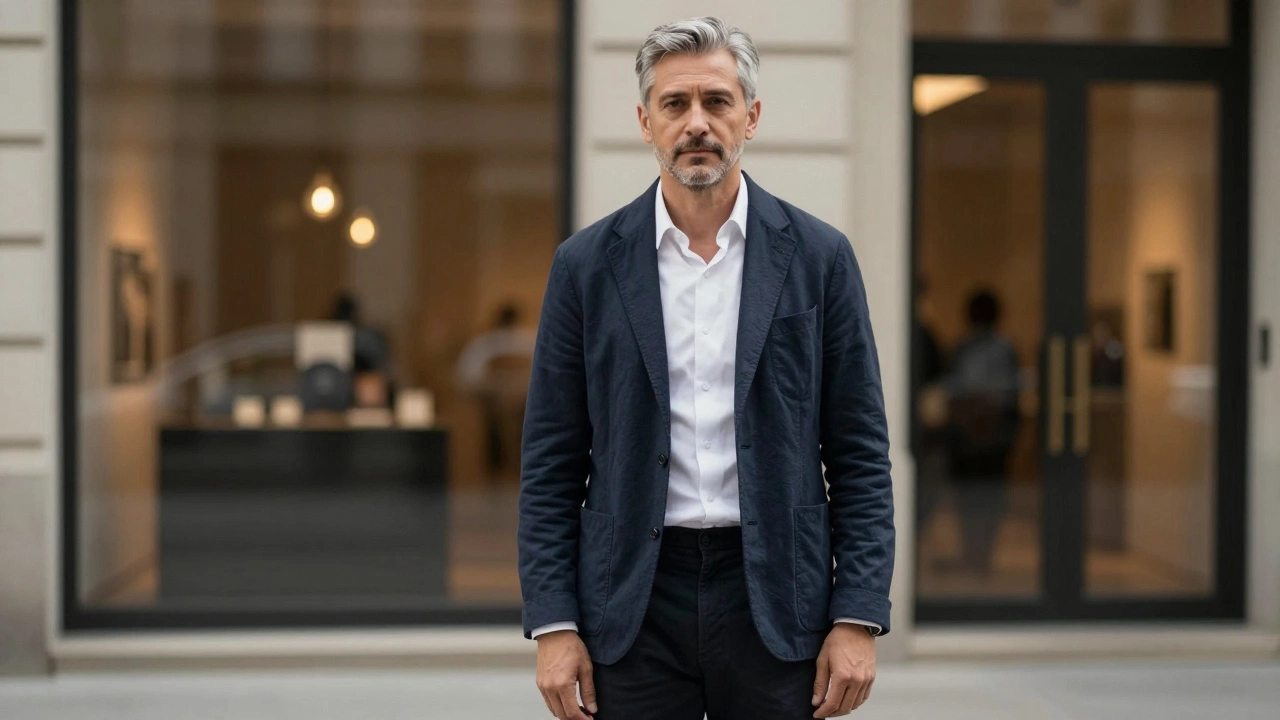
There’s a quiet power in a man who knows how to carry himself in his 40s.
It’s not about looking young. It’s about looking like yourself-but better. Sharper. More intentional. The men who truly stand out in their 40s aren’t the ones chasing trends or trying to reverse time. They’re the ones who’ve learned how to refine what matters: fit, presence, and consistency.
Think of it this way: your 20s are about experimentation. Your 30s are about building a foundation. Your 40s? That’s when the real craftsmanship begins. The lines on your face aren’t flaws-they’re evidence of experience. The silver threading through your hair isn’t a problem to fix. It’s a signature.
Style isn’t about youth. It’s about precision.
Too many men in their 40s fall into one of two traps: either they cling to the clothes they wore at 25-baggy jeans, oversized tees, sneakers with no purpose-or they overcorrect, trying to look like a 30-year-old model in a tailored suit. Neither works.
The right approach is simplicity with intention. A well-fitted navy blazer, worn with dark chinos and a crisp white shirt, does more than any designer logo ever could. It says you care without shouting. It says you’ve earned the right to dress simply-and you know how to make it look expensive.
Fit is everything. Shoulders should sit where your natural shoulder ends. Sleeves should end at the base of your thumb. Trousers should break just once, lightly, over your shoe. These aren’t fashion rules. They’re laws of physics for elegance.
Brands like Anderson & Sheppard, Suitsupply, and Brooks Brothers have built reputations on this principle. They don’t sell youth. They sell proportion. They understand that a man in his 40s doesn’t need to look like he’s on a runway. He needs to look like he belongs in the boardroom, at the gallery opening, or seated at a quiet table in a Michelin-starred restaurant.
Grooming: Less is more, but done right.
Facial hair in your 40s should be neat, not trendy. A well-trimmed stubble or a clean-shaven look works best. Avoid the full beard unless it’s carefully maintained-untrimmed facial hair can look unkempt, not rugged.
Skincare isn’t vanity. It’s respect. Your skin has been exposed to sun, stress, and sleepless nights. A simple routine-gentle cleanser, moisturizer with SPF 30+, and an eye cream-makes a visible difference. You don’t need 10 products. You need consistency.
Haircuts matter more now than ever. Shorter sides, slightly longer on top, with a clean line at the nape. No mullets. No disconnected layers. A barber who understands structure, not Instagram trends, is worth their weight in gold. Look for someone who’s been cutting hair for 20 years-not someone with 500k followers.
And don’t forget your nails. Clean, trimmed, and free of dirt. It’s the smallest detail, but it’s the first thing people notice when you shake their hand.
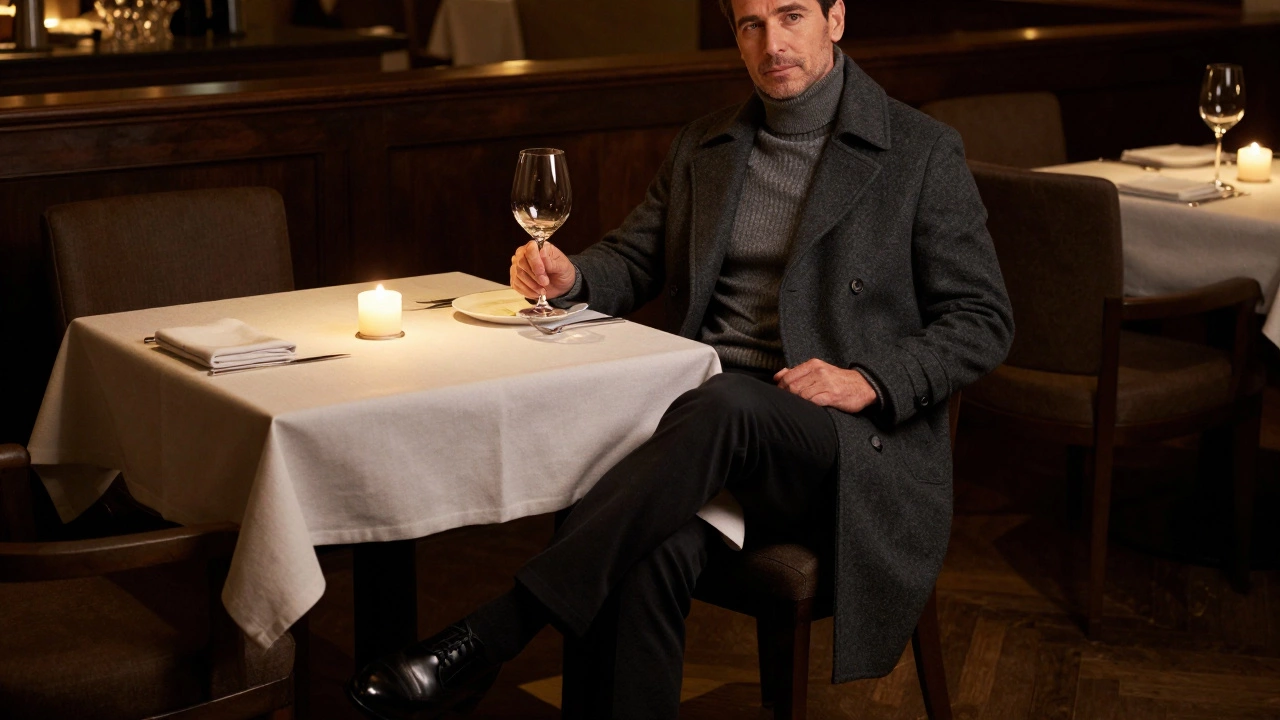
Color and texture: The silent language of maturity.
Men in their 40s should lean into muted tones: charcoal, olive, navy, cream, deep burgundy. These colors don’t shout. They resonate. They age gracefully.
Texture adds depth without complexity. A wool blend overcoat, a cashmere turtleneck, a linen shirt in summer-these are the materials that feel as good as they look. They breathe. They drape. They last.
Avoid neon, logos, or anything with a slogan. You’re not advertising a product. You’re presenting yourself as one.
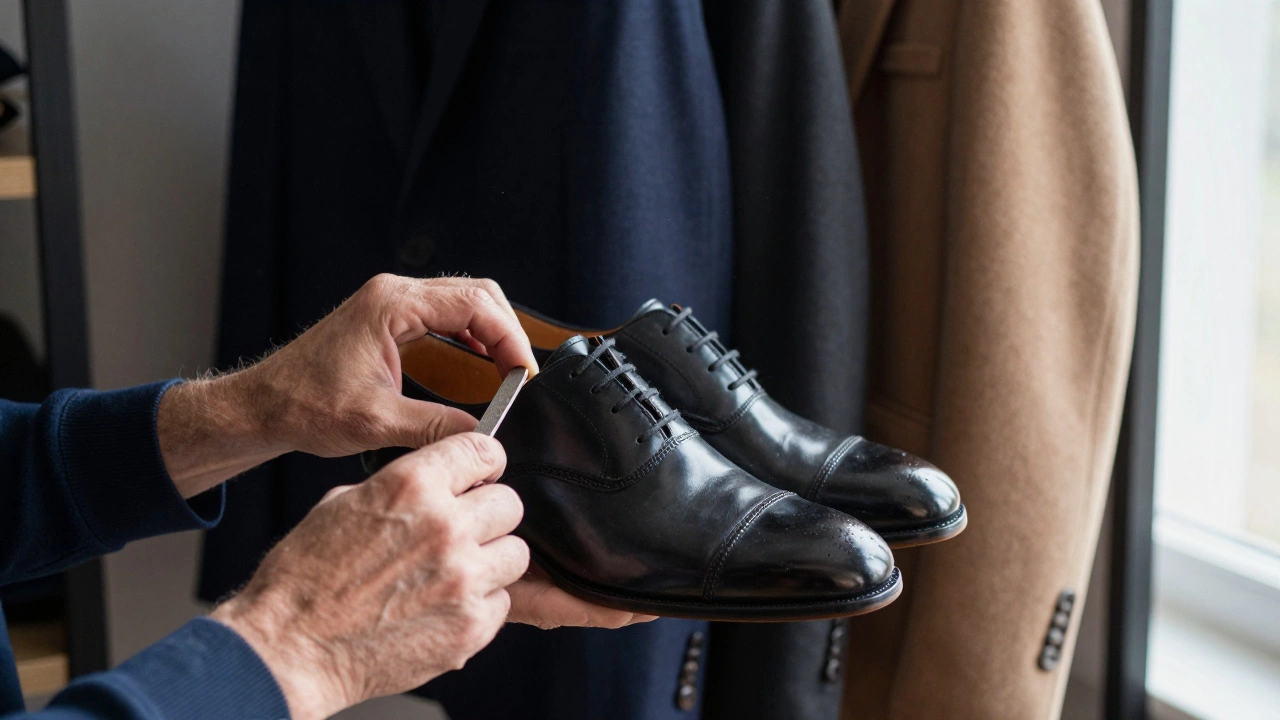
Shoes should be polished, not flashy. A pair of dark brown or black oxfords, well-maintained, will outlast three pairs of sneakers. They’re the foundation of your silhouette. If your shoes look tired, your whole look looks tired.
Posture and presence: The real tailoring.
Style isn’t just what you wear. It’s how you stand. How you walk. How you hold your coffee cup.
Men in their 40s often carry the weight of responsibility-families, careers, expectations. That pressure can lead to slumped shoulders, a downward gaze, a tired stance. But posture is a choice. Stand tall. Shoulders back. Chin level. Not rigid. Not arrogant. Just present.
Eye contact matters. A firm, calm handshake matters. Speaking slowly and clearly matters. These aren’t tricks. They’re habits of confidence.
There’s a reason older men in films like The Godfather or Mad Men still command attention. It’s not their suits. It’s their stillness. They don’t need to prove anything. That’s the most powerful look of all.
The wardrobe you need-not the one you think you want.
Here’s what a man in his 40s actually needs in his wardrobe:
- Two tailored navy blazers (one wool, one linen for summer)
- Three pairs of well-fitting trousers: dark navy, charcoal, and olive
- Five button-down shirts: white, light blue, and three subtle patterns (pin stripe, micro-check, herringbone)
- One fine-gauge merino wool sweater (navy or charcoal)
- One classic overcoat (camel or charcoal wool)
- One pair of black oxfords
- One pair of dark brown loafers
- One pair of clean, minimalist white sneakers (for casual days)
That’s it. No more. No less. Everything should mix and match. Everything should last. Everything should feel like it belongs to you.
Don’t buy for the season. Buy for the decade.
It’s not about looking good. It’s about feeling like yourself.
The most attractive men in their 40s aren’t the ones who look like they’re trying to impress. They’re the ones who look like they’ve stopped trying.
They’re the ones who take their time. Who don’t rush through meals. Who listen more than they speak. Who wear their confidence like a second skin-quiet, natural, unforced.
You don’t need to be younger to be compelling. You need to be whole.
Time doesn’t steal from a man. It reveals him. And if you’ve spent your 20s and 30s learning who you are, your 40s become the most elegant chapter yet.
What to avoid
- Wearing clothes that are too tight or too loose
- Trying to look like a celebrity half your age
- Ignoring grooming because you’re "too busy"
- Wearing athletic wear as casual attire
- Letting your posture collapse under stress
Final thought
There’s no magic formula. No cream, no cut, no suit that will turn back time. But there is a path: clarity, care, and consistency.
Men who look good in their 40s aren’t lucky. They’re deliberate. They’ve chosen to invest in themselves-not for others, but for the quiet satisfaction of knowing they’ve lived well, dressed well, and carried themselves with dignity.
That’s not just style. That’s character.
Is it too late to improve my style in my 40s?
Not at all. Style isn’t a race with an expiration date. It’s a practice. Many of the most respected men in business and culture refined their look in their 40s and beyond. Start with one item-a well-fitted shirt or a pair of proper shoes-and build from there. Progress, not perfection, is the goal.
Should I dye my grey hair?
Only if it makes you feel more like yourself. Many men embrace silver as a sign of authority and calm. If you choose to cover it, go for a natural shade-not jet black. A subtle tonal match looks far more authentic than an obvious dye job. Ultimately, confidence in your natural appearance is more compelling than any color.
What’s the best way to update my wardrobe without spending a fortune?
Focus on quality over quantity. Sell or donate items that no longer fit or suit your style. Use the money to invest in one or two key pieces-a tailored blazer, a pair of leather shoes, a wool coat. These will elevate everything else you own. Look for sales at reputable brands, or consider pre-owned luxury from trusted sellers. A well-cared-for second-hand item often outperforms a new fast-fashion piece.
Do I still need to wear a tie?
Only if the occasion calls for it. In most modern professional settings, a well-fitted shirt with a blazer is enough. But having a few classic ties-solid silk in navy, burgundy, or charcoal-gives you options for formal events, interviews, or dinners where a touch of polish matters. Keep them simple. Avoid loud patterns or novelty prints.
How do I know if my clothes fit properly?
Stand naturally in front of a mirror. For shirts: the collar should lie flat without gaping, and the sleeves should end at your wrist bone. For jackets: you should be able to fit a fist between the jacket and your stomach when buttoned. For trousers: they should sit at your natural waist, not your hips, and have a clean break over your shoes. If you’re unsure, visit a tailor. A £30 adjustment can transform a £300 shirt from "okay" to "excellent."