

Mindset Mirror: Fixed vs. Growth
Select the response that best aligns with your initial instinct for each scenario. Then, click "Reframing Strategy" to see how a gentleman with a growth mindset would handle it.
Loading...
Fixed Mindset
...
Growth Mindset
...
The Gentleman's Approach:
Your Mindset Profile
There is a quiet distinction between the man who believes his talents are fixed and the man who believes they can be cultivated. The former waits for opportunity; the latter creates it. This difference in perspective-what psychologists call a Growth Mindset, defined as the belief that abilities and intelligence can be developed through dedication and hard work-is not merely an academic concept. It is the bedrock of modern success, particularly for men seeking to refine their character, advance their careers, and maintain composure under pressure.
In a world that often rewards quick wins and superficial confidence, adopting a growth mindset is a deliberate act of discipline. It requires you to view setbacks not as verdicts on your worth, but as data points for improvement. For the modern gentleman, this mindset is less about shouting affirmations and more about the steady, unglamorous work of becoming better than you were yesterday. It is the difference between a tailor who hides a mistake and one who studies the stitch to ensure perfection next time.
The Foundation: Understanding Fixed vs. Growth Perspectives
To implement these strategies effectively, you must first recognize where your mind currently resides. Dr. Carol Dweck, the Stanford psychologist who popularized this framework, identified two distinct patterns of thinking. The Fixed Mindset operates on the assumption that your traits are carved in stone. You are either good at public speaking or you are not. You are either analytical or you are creative. This binary thinking leads to fragility. When you encounter resistance, you feel exposed because failure suggests a lack of inherent ability.
Conversely, the Growth Mindset views ability as a muscle. It acknowledges that while some may have a head start, everyone can improve with sufficient effort and strategy. Consider the analogy of a bespoke suit. A fixed mindset sees a poorly fitting jacket as a flaw in the fabric. A growth mindset sees it as a challenge for the tailor to adjust the cut. The material hasn’t changed; only the approach to refinement has.
Recognizing this distinction is crucial because most men operate on autopilot, defaulting to fixed thoughts when stressed. The goal is not to eliminate the fixed mindset entirely-that is unrealistic-but to catch it when it arises and consciously shift gears. This awareness is the first step toward mental resilience.
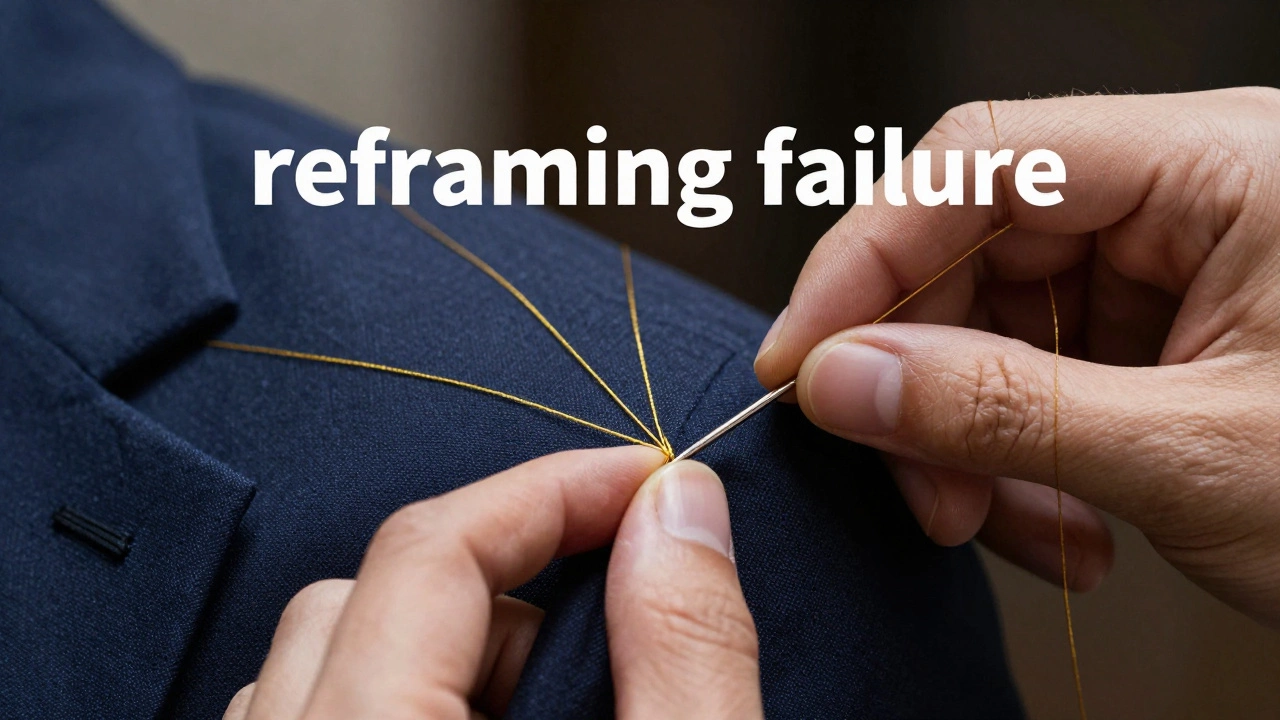
Strategy 1: Reframing Failure as Feedback
The most potent growth mindset strategy is changing your relationship with failure. In a fixed mindset, failure is an identity: “I failed.” In a growth mindset, failure is an event: “I tried something, and it didn’t work yet.” This subtle linguistic shift changes everything. It removes the emotional sting and replaces it with curiosity.
Consider a scenario in your professional life. Perhaps you pitched a new business idea to your board, and it was rejected. A fixed response might be, “They don’t respect my vision,” leading to withdrawal. A growth response asks, “What part of the pitch lacked clarity? Was the financial modeling robust enough?” By treating rejection as feedback, you gain actionable insights rather than emotional scars.
To practice this:
- Analyze, don’t internalize: After a setback, write down three specific factors that contributed to the outcome. Focus on actions, not character.
- Seek the lesson immediately: Within 24 hours of a failure, identify one thing you will do differently next time.
- Normalize the struggle: Remind yourself that elite performers-from surgeons to CEOs-encounter daily failures. Their success lies in their recovery speed.
Strategy 2: The Power of “Yet”
One of the simplest yet most effective tools in your psychological arsenal is the word “yet.” It transforms a statement of limitation into a statement of potential. Instead of saying, “I don’t understand this market trend,” say, “I don’t understand this market trend yet." This small addition signals to your brain that the current state is temporary and changeable.
This strategy is particularly useful in social dynamics and skill acquisition. If you find yourself struggling to connect with a peer in a different industry, resist the urge to label yourself as “bad at networking.” Instead, acknowledge that you haven’t mastered the art of cross-industry rapport yet. This keeps you open to learning rather than closed off by defensiveness.
Monitor your internal dialogue. When you hear yourself use absolute terms like “always,” “never,” or “can’t,” pause and insert “yet.” It sounds trivial, but it rewires your neural pathways over time, fostering persistence and reducing anxiety.
Strategy 3: Embracing Process Over Outcome
Men are often conditioned to focus heavily on outcomes: the promotion, the deal, the trophy. While goals are important, an exclusive focus on results makes you vulnerable to burnout and disappointment. A growth mindset prioritizes the process-the daily habits and systems that lead to those results.
Think of it like maintaining a classic car. You don’t just drive it to the destination; you enjoy the mechanics of the engine, the precision of the steering, and the care of maintenance. Similarly, in your career, find satisfaction in the quality of your work, the depth of your research, and the integrity of your interactions. When you love the process, the outcome becomes a byproduct rather than a source of stress.
To implement this:
- Set process goals: Instead of aiming to “lose 10 pounds,” aim to “cook healthy meals five times a week.”
- Celebrate effort: Acknowledge your dedication, even if the result isn’t immediate.
- Review your systems: Regularly ask, “Are my daily habits aligned with my long-term values?”
Strategy 4: Seeking Constructive Criticism
A man with a fixed mindset views criticism as a personal attack. He builds walls to protect his ego. A man with a growth mindset views criticism as free consulting. He lowers his defenses to gather information. This is perhaps the hardest strategy to master, as it requires humility and emotional control.
Imagine receiving feedback from a mentor that your presentation style is too aggressive. Your instinct might be to defend yourself: “I’m just passionate!” But a growth-oriented response is: “Thank you. Can you give me examples of moments where I came across as aggressive? How can I soften my tone without losing impact?”
Actively seek out critics who have your best interests at heart. These are not friends who flatter you, but respected peers who hold you to a higher standard. Create a “feedback loop” in your life where you regularly ask trusted colleagues, partners, or mentors for honest assessments of your performance. This turns vulnerability into strength.

Strategy 5: Learning from Others’ Success
Jealousy is a symptom of a fixed mindset. It stems from the belief that there is a limited amount of success and that someone else’s gain is your loss. A growth mindset allows you to be inspired by others. You see their success as proof that what you want is possible, and you study their methods to learn from them.
When you admire a competitor’s achievement, shift from envy to analysis. Ask: “What skills did they develop? What networks did they build? What risks did they take?” This transforms a negative emotion into a strategic roadmap. It aligns with the gentlemanly virtue of sportsmanship-respecting the game and the players, regardless of the score.
| Situation | Fixed Mindset Response | Growth Mindset Response |
|---|---|---|
| Receiving Criticism | Defensive, dismissive | Curious, grateful |
| Facing Failure | “I’m not good at this.” | “What can I learn from this?” |
| Seeing Others Succeed | Threatened, jealous | Inspired, analytical |
| Encountering Challenges | Avoidance, giving up | Persistence, strategy adjustment |
Integrating Growth Mindset into Daily Life
Adopting a growth mindset is not a one-time decision; it is a daily practice. It requires mindfulness and intentionality. Start small. Choose one area of your life-perhaps your fitness routine or a professional skill-and apply these strategies consistently. Notice how your reactions change. Notice how your confidence grows not from arrogance, but from evidence of your own capacity to adapt and improve.
Remember, the goal is not perfection. It is progress. The gentleman does not boast about his knowledge; he demonstrates it through his willingness to keep learning. He does not fear change; he welcomes it as an opportunity to refine his character. By embracing these growth mindset strategies, you equip yourself with the resilience to navigate life’s complexities with grace, dignity, and enduring success.
How can I tell if I have a fixed mindset?
You likely have a fixed mindset if you avoid challenges to prevent failure, give up easily when things get difficult, believe that talent is innate rather than developed, and feel threatened by the success of others. Notice if you frequently use phrases like “I’m just not good at this” or “I’ve always been bad at math.”
Can a grown adult really change their mindset?
Absolutely. Neuroplasticity-the brain's ability to reorganize itself by forming new neural connections-continues throughout life. While habits formed in childhood are strong, conscious effort and consistent practice can reshape your thought patterns at any age. It requires patience and self-compassion.
Is a growth mindset just positive thinking?
No. Positive thinking can sometimes lead to ignoring reality. A growth mindset is grounded in realism. It acknowledges difficulties and failures but focuses on the ability to overcome them through effort and strategy. It is active, not passive.
How does a growth mindset affect leadership?
Leaders with a growth mindset foster innovation and trust. They encourage risk-taking, admit their own mistakes, and prioritize development over blame. This creates a culture where team members feel safe to experiment and grow, leading to higher engagement and better problem-solving.
What should I do when I slip back into a fixed mindset?
Don’t judge yourself harshly. Slipping is part of the process. Acknowledge the fixed thought (“I’m feeling defensive right now”), then consciously choose a growth response (“What can I learn from this situation?”). Treat it like a muscle workout: the strain means you’re building strength.