
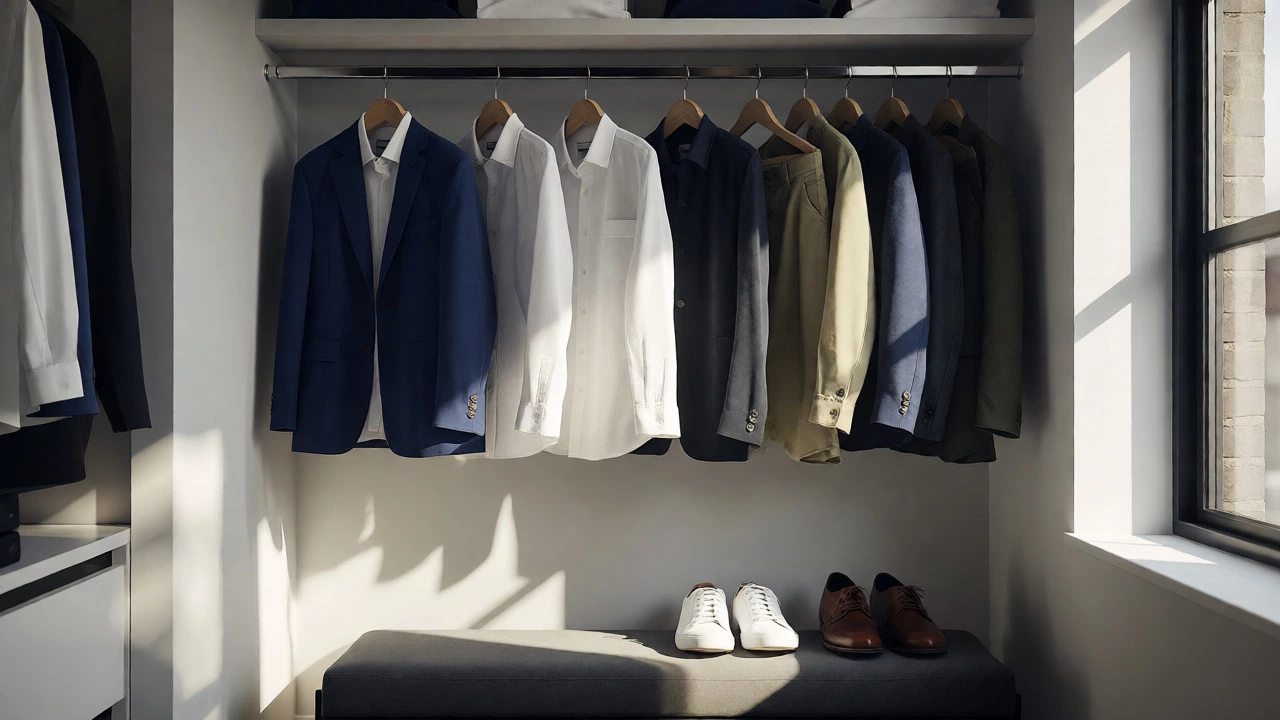
Men's Capsule Wardrobe Builder
Total Items
0
Excludes underwear/socks
Est. Initial Cost
£0
Based on mid-tier brands
Status
-
Target: 30-40 items
| Category | Item Type | Qty | Est. Unit Price | Subtotal |
|---|
You open your closet. It is full of clothes. Yet you have nothing to wear. This paradox plagues modern men more than any other lifestyle issue. We buy trends, we hoard discounts, and we end up with a collection that lacks cohesion. The solution isn't buying more. It is buying better. A men's capsule wardrobe is a curated collection of interchangeable clothing pieces that work together harmoniously. It reduces decision fatigue, saves money, and ensures you look put-together without effort.
This approach is not about deprivation. It is about intentionality. By limiting your options to high-quality staples, you eliminate the mental load of choosing an outfit every morning. You stop worrying if your shirt matches your trousers because every item in your rotation has been vetted for compatibility. For the man aged 25 to 55, this shift transforms dressing from a chore into a quiet confidence.
The Core Philosophy of Minimalist Menswear
A capsule wardrobe operates on the principle of versatility. Each piece must serve multiple purposes. A navy blazer is not just for weddings; it works over a t-shirt for dinner or with chinos for a casual office day. If an item only works with one specific pair of shoes or pants, it fails the capsule test. This constraint forces you to think about color palettes and fabric textures before you ever reach for your wallet.
Consider the cost-per-wear metric. A £40 fast-fashion shirt might last ten washes before losing its shape. That is £4 per wear. A £120 Oxford cloth button-down from a reputable maker like Brooks Brothers or Charles Tyrwhitt might last five years with proper care. Even at 200 wears, that is 60 pence per wear. The initial investment feels higher, but the long-term value is undeniable. Quality fabrics breathe better, drape superiorly, and age with character rather than looking worn out.
Defining Your Personal Style Palette
Before buying anything, define your colors. Most men default to black, grey, and blue. These are safe, but they can feel uniform if not textured correctly. Start with three neutrals as your foundation. Navy, charcoal, and off-white (or light grey) form the classic triad. They mix effortlessly. Add one accent color that suits your complexion. Olive green, burgundy, or forest green add depth without shouting for attention.
Avoid pure white shirts if you have a cool skin tone; opt for bright whites or light blues instead. If you have warm undertones, cream or ecru often looks softer and more refined. Test these shades in natural daylight. Artificial store lighting lies. You want to see how the fabric interacts with your skin tone under the sun, not under fluorescent tubes.
The Essential Components of a Capsule
While individual needs vary based on climate and profession, a functional men's capsule typically consists of 30 to 40 items. This includes outerwear, tops, bottoms, footwear, and accessories. Here is how to break down the essentials.
| Category | Item | Quantity | Key Attribute |
|---|---|---|---|
| Tops | White Oxford Cloth Button-Down | 2 | Heavyweight cotton, unstructured shoulder |
| Tops | Plain T-Shirts | 4 | Mid-weight cotton, fitted but not tight |
| Tops | Merino Wool Sweater | 2 | Crew neck, fine gauge, neutral colors |
| Bottoms | Dark Indigo Jeans | 1 | Slim-straight fit, no distressing |
| Bottoms | Chinos | 2 | Navy and Khaki/Olive, mid-rise |
| Bottoms | Grey Wool Trousers | 1 | Tailored fit, side adjusters preferred |
| Outerwear | Navy Blazer | 1 | Unstructured, two-button, patch pockets |
| Outerwear | Trench Coat | 1 | Beige or Navy, knee-length |
| Footwear | White Leather Sneakers | 1 | Minimalist design, clean lines |
| Footwear | Brown Leather Derbies | 1 | Closed lacing system, Goodyear welted |
This list is a starting point, not a straitjacket. If you live in London, where rain is frequent, prioritize water-resistant outerwear. If you work in finance, swap the sneakers for a second pair of leather dress shoes. The goal is coverage for all social scenarios in your life with minimal overlap.
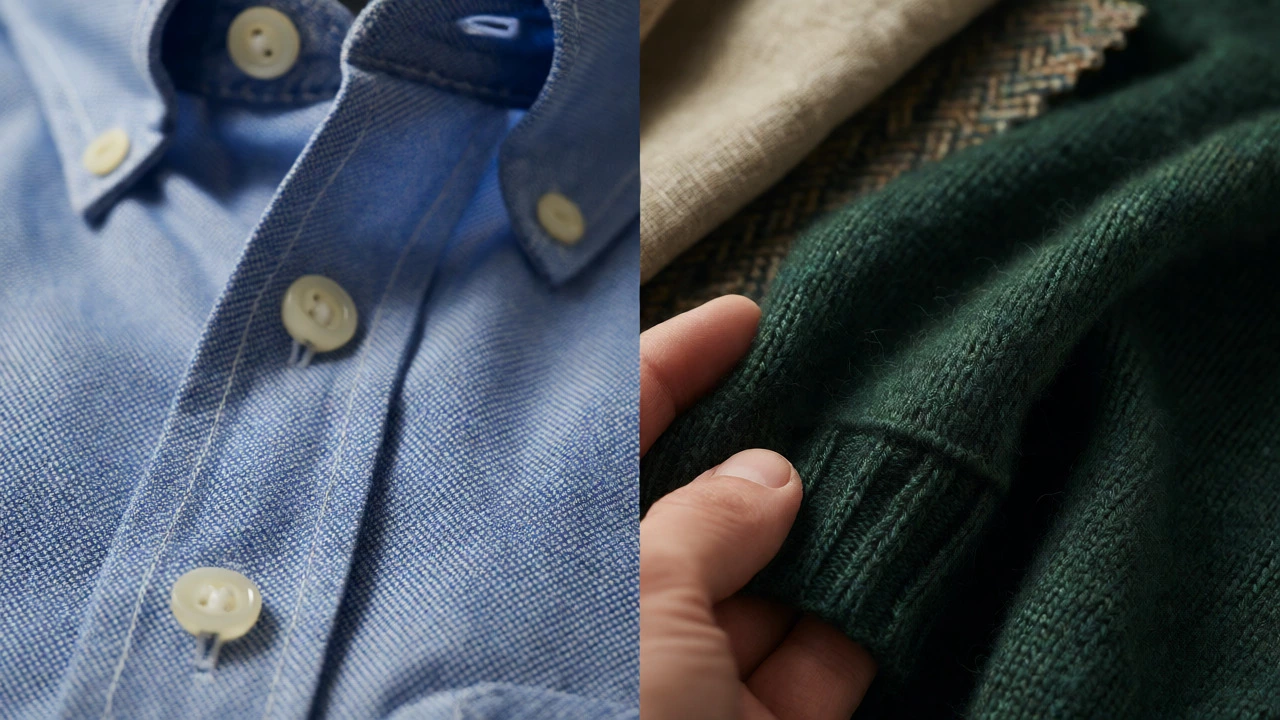
Fit Is King: The Non-Negotiable Rule
You can own the most expensive suit in Savile Row, but if it fits poorly, it looks cheap. Conversely, a well-fitted £50 shirt looks bespoke. Fit is the single biggest differentiator between a sloppy dresser and a stylish one. Most men buy clothes that are too big. Shoulders should align exactly with your natural shoulder line. Sleeves should show about half an inch of cuff when wearing a jacket. Trousers should break slightly on the shoe or sit cleanly above it-no puddling of fabric around the ankles.
Find a good tailor. This is the secret weapon of every well-dressed man. Spending £20 to take in the waist of a pair of jeans or shorten a sleeve transforms off-the-rack garments into custom-feeling pieces. Do not fear alterations. They extend the life of your clothes and ensure they flatter your specific body type, not the average model size the brand assumed.
Material Matters: Choosing Fabrics for Longevity
Fabric choice dictates comfort and durability. Avoid synthetic blends for base layers. Polyester traps sweat and smells quickly. Cotton, linen, and wool are breathable and regulate temperature effectively. For summer, choose lightweight cotton poplin or linen blends. For winter, merino wool provides warmth without bulk. Cashmere is luxurious but requires careful maintenance; reserve it for occasional wear unless you enjoy the upkeep.
Check the weight of the fabric. Heavier cottons (like oxford cloth) hold their shape better than thin, silky materials. Thicker denim lasts longer and fades beautifully. When shopping, rub the fabric between your fingers. Does it feel substantial? Does it bounce back after being crumpled? These tactile cues tell you more about quality than the price tag does.

Maintenance and Care: Protecting Your Investment
A capsule wardrobe relies on longevity. If your clothes fall apart, you have to replace them, defeating the purpose of minimalism. Wash less. Over-washing breaks down fibers and fades colors. Spot-clean minor stains immediately. Air out jackets and sweaters after wear instead of throwing them in the hamper. Use cedar blocks in your closet to absorb moisture and repel moths naturally.
Rotate your shoes. Never wear the same pair two days in a row. Leather needs time to dry out completely from foot sweat. Using shoe trees maintains the shape and absorbs residual moisture. This simple habit doubles the lifespan of your footwear. Treat your leather boots with conditioner twice a year. Neglect leads to cracking and premature replacement.
Transitioning Seasons Without Chaos
Living in a temperate climate like the UK means dealing with four distinct seasons. Your capsule should adapt seamlessly. Layering is key. A t-shirt becomes a base layer under a sweater, which goes under a blazer, which goes under a coat. This modular approach allows you to adjust to temperature changes throughout the day without carrying extra luggage.
In spring, shed the heavy coats and introduce lighter chinos and linen-blend shirts. In autumn, bring back the tweed jackets and heavier knits. Store off-season items properly. Vacuum bags save space but can crush delicate wools. Use breathable garment bags for suits and coats. Label boxes clearly so you do not have to rummage through winter gear in July.
Common Pitfalls to Avoid
Many men fail with capsule wardrobes because they mistake minimalism for boredom. They buy everything in beige and look invisible. Add texture to create visual interest. Pair a smooth cotton shirt with a rough knit sweater. Contrast matte wool trousers with polished leather shoes. Texture adds depth without needing loud patterns.
Another mistake is ignoring accessories. A watch, a belt, and sunglasses complete the look. Ensure your leathers match roughly in tone-brown belts with brown shoes, black with black. You do not need to match them perfectly, but they should complement each other. A simple silver watch or a leather strap keeps the aesthetic cohesive.
Finally, do not rush the process. Building a capsule wardrobe takes time. Sell what you do not wear. Donate items that no longer fit your style. Buy slowly. Wait for sales. Invest in the best version of an item you can afford, even if it takes six months to save up. Patience yields better results than impulse buys.
How many items make up a true capsule wardrobe?
There is no strict number, but most effective capsules range from 30 to 40 items including outerwear, shoes, and accessories. This count excludes underwear and socks. The goal is enough variety to cover a two-week cycle without repeating outfits visibly, while ensuring every item mixes with at least three others.
Can I wear patterns in a capsule wardrobe?
Yes, but use them sparingly. Stick to subtle patterns like pinstripes, checks, or small herringbones. Large, loud prints tend to date quickly and limit versatility. If you include a patterned shirt, ensure the colors within the pattern appear in your solid-colored trousers and jackets to maintain cohesion.
What brands offer good entry-level capsule pieces?
For basics, Uniqlo offers excellent value in cottons and knits. For tailoring and smarter casuals, consider Suitsupply, J.Crew, or Reiss. For footwear, Meermin and Loake provide great Goodyear-welted options at accessible prices. These brands balance quality, fit, and price reasonably well for someone starting out.
Do I need a suit in a capsule wardrobe?
It depends on your profession. If you attend formal events or work in corporate environments, a navy or charcoal suit is essential. If your work is creative or casual, a navy blazer and grey wool trousers can serve the same function with greater versatility. Assess your actual needs before investing in a full suit.
How do I handle special occasions?
Keep a few "special occasion" items outside the daily capsule. A tuxedo for black-tie events or a specific festive sweater can be stored separately. The core capsule covers 90% of your daily life. The remaining 10% requires targeted purchases that you keep in rotation for years due to their infrequent but critical use.