

7-Day Life Reset Planner
Your Progress
Complete tasks across all 7 days to build momentum.
Transformation Report
Transformation Score
Recommended Habits to Keep
Based on your completion data, focus on these areas next week:
Most men wait for a crisis to force a change. They wait until the health check comes back bad, the relationship fractures, or the career stagnates into something unrecognizable. But waiting for rock bottom is not a strategy; it is merely a reaction. You do not need a catastrophe to reset your trajectory. In fact, relying on dramatic life events often leads to reactive, short-lived fixes that fade as quickly as they appeared.
The idea of changing your life in seven days sounds like marketing hype. It is easy to dismiss it as unrealistic. However, if you strip away the fantasy of becoming a billionaire by Sunday, what remains is a powerful psychological tool: the seven-day sprint. This is not about permanent transformation overnight. It is about breaking inertia. It is about proving to yourself that you can execute a new standard of living, even if just for a week. Once you prove it is possible, the momentum carries you forward.
This guide outlines a structured, high-impact week designed to reset your physical energy, mental clarity, and professional focus. It is built for the modern gentleman who values precision, discipline, and quiet confidence over loud declarations.
Day 1: The Physical Reset
You cannot build a new life on a tired body. Most men underestimate how much their physical state dictates their mental resilience. If you are sluggish, irritable, and foggy, no amount of positive thinking will help. Day 1 is not about running a marathon. It is about clearing the biological debt.
Start with sleep hygiene. Tonight, put the phone in another room. No screens after 9 PM. Read a book, listen to music, or simply sit in silence. Aim for eight hours. Sleep is the foundation of testosterone regulation and cognitive function. Without it, every other effort is compromised.
In the morning, hydrate immediately. Drink 500ml of water before coffee. Your body is dehydrated after sleep, which causes fatigue. Then, move. You do not need a gym membership for this day. Go for a brisk 30-minute walk outside. Exposure to natural light resets your circadian rhythm and boosts serotonin. This simple act signals to your brain that the old, sedentary habits are ending.
Day 2: Environmental Decluttering
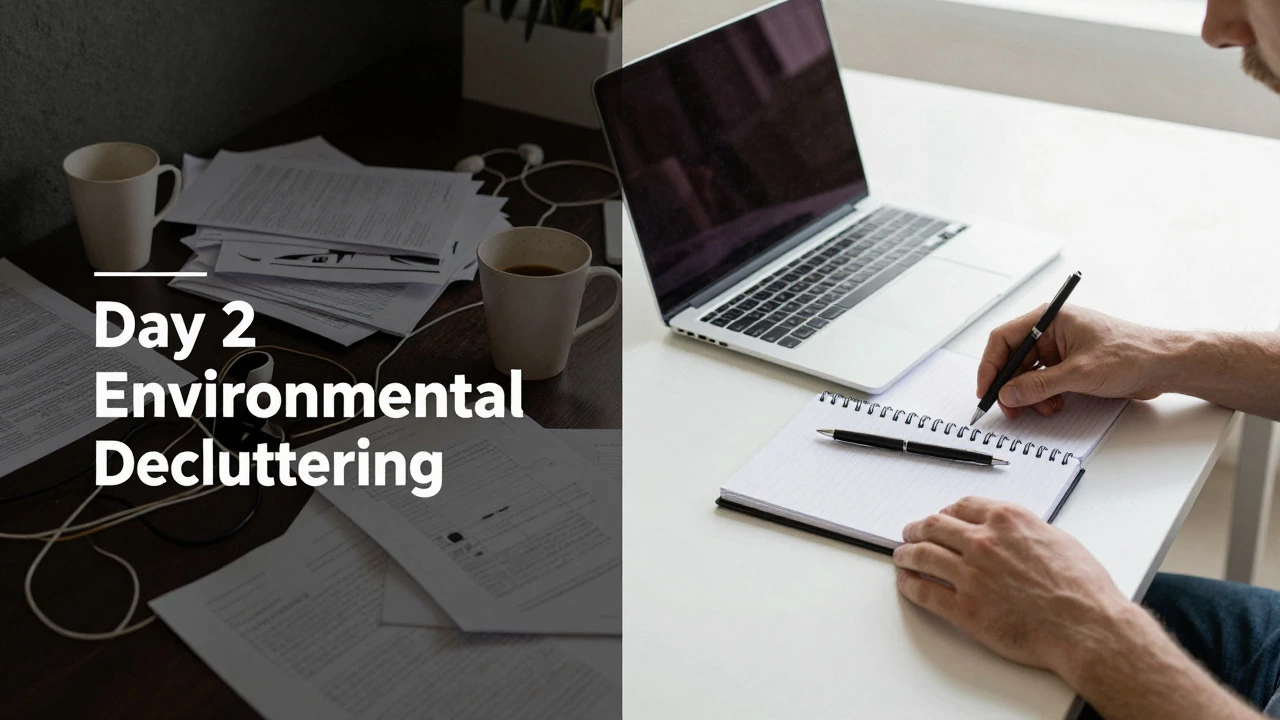
Your environment shapes your behavior. A cluttered desk leads to a cluttered mind. This is not just a metaphor; it is neurobiology. Visual noise creates cognitive load, draining your mental energy before you even start working. On Day 2, you will reclaim your space.
Focus on three areas: your bedroom, your workspace, and your digital desktop. Remove anything that does not serve a purpose or bring you joy. Throw away broken pens, expired receipts, and clothes you haven't worn in two years. Digital clutter is equally damaging. Unsubscribe from newsletters you never read. Delete apps that consume time without adding value. Organize your computer files into clear folders.
When you look around your room at the end of the day, it should feel calm and intentional. Every object has a place. This orderliness reduces decision fatigue, freeing up mental bandwidth for more important tasks. A clean space allows for clear thought.
Day 3: Financial Audit
Financial stress is one of the leading causes of anxiety for men. Ignoring your finances does not make them go away; it only makes them worse. Day 3 is about facing reality with clarity and composure. You do not need to become an accountant, but you must know where your money goes.
Pull out your bank statements from the last three months. Look for subscriptions you forgot about, impulse purchases, and recurring expenses that no longer align with your values. Calculate your net worth-assets minus liabilities. This number might be uncomfortable, but knowledge is power. Once you see the data, you can make informed decisions.
Set a simple budget for the next month. Allocate funds for essentials, savings, and discretionary spending. Automate your savings if possible. By taking control of your finances, you remove a significant source of background stress. You gain the freedom to pursue goals without financial fear holding you back.
Day 4: Social Pruning
We are the average of the five people we spend the most time with. This is a cliché because it is true. Reflect on your social circle. Who energizes you? Who drains you? Who challenges you to be better? Who encourages your worst habits?
On Day 4, you do not need to cut everyone off. That is impractical and rude. Instead, set boundaries. Limit time with negative influencers. Cancel plans that leave you feeling depleted. Reach out to one person who inspires you-a mentor, a successful friend, or a former colleague. Ask for advice or simply catch up. Positive social interactions boost oxytocin and reduce cortisol.
Quality over quantity. It is better to have two close, supportive friends than twenty acquaintances who only call when they need something. Protect your time and attention. They are your most valuable assets.
Day 5: Skill Acquisition
Stagnation is the enemy of growth. To change your life, you must expand your capabilities. Day 5 is dedicated to learning something new. This could be related to your career, a hobby, or personal wellness. The key is consistency, not intensity.
Choose one skill to focus on. Maybe it is public speaking, coding, cooking a new cuisine, or learning a language. Spend one hour today practicing. Use resources like online courses, books, or YouTube tutorials. The goal is not mastery; it is engagement. Show up and do the work.
Learning activates neuroplasticity, keeping your brain sharp and adaptable. It also builds confidence. When you see progress, no matter how small, you reinforce the belief that you can improve. This mindset is crucial for long-term success.
Day 6: Mental Resilience
Modern life is noisy. Notifications, news, emails-they constantly pull your attention. Day 6 is about training your mind to focus and remain calm under pressure. This is the essence of mental resilience.
Practice mindfulness meditation for ten minutes. Sit quietly, focus on your breath, and observe your thoughts without judgment. When your mind wanders, gently bring it back. This is not empty spiritualism; it is cognitive training. Studies show that regular meditation reduces stress and improves emotional regulation.
Additionally, implement a "digital detox" period. Turn off notifications for non-essential apps. Check email only at specific times, not continuously. Reclaim your attention span. When you can focus deeply for extended periods, you become more productive and less anxious. Control your inputs, and you control your outputs.

Day 7: Reflection and Integration
The final day is not about doing more; it is about consolidating what you have learned. Review the past six days. What worked? What felt difficult? What surprised you?
Write down three key insights. Perhaps you discovered that sleeping earlier made you more productive. Maybe you realized that cutting out junk food improved your mood. Identify the habits that had the biggest impact. These are the practices you will carry forward.
Create a simple plan for the next week. Do not try to maintain all seven changes at once if it feels overwhelming. Pick the top two or three habits and commit to them. Consistency beats intensity. Small, sustainable changes compound over time. You have proven that change is possible. Now, keep moving.
| Day | Focus Area | Key Action |
|---|---|---|
| 1 | Physical Health | Sleep hygiene, hydration, morning walk |
| 2 | Environment | Declutter physical and digital spaces |
| 3 | Finances | Audit spending, set budget |
| 4 | Social Circle | Set boundaries, connect with positive influences |
| 5 | Skill Building | Practice a new skill for one hour |
| 6 | Mental Clarity | Meditate, limit digital distractions |
| 7 | Integration | Reflect, select top habits to continue |
Why This Approach Works
This seven-day framework works because it addresses multiple dimensions of well-being simultaneously. It is holistic. You are not just fixing your diet or your job; you are upgrading your entire operating system. By tackling physical, environmental, financial, social, intellectual, and mental aspects, you create a balanced foundation for growth.
Moreover, the short timeframe lowers the barrier to entry. Committing to a year-long overhaul feels daunting. Committing to seven days feels manageable. Once you complete the week, you have broken the cycle of procrastination. You have evidence of your own capability. This psychological shift is often the hardest part of any change process.
Remember, the goal is not perfection. It is progress. There will be setbacks. You will miss a workout, eat poorly, or argue with a friend. That is normal. The key is to return to the path quickly. Resilience is not about never falling; it is about getting back up faster each time.
Common Pitfalls to Avoid
Many men fail in their attempts to change because they fall into common traps. First, they try to do everything at once. They wake up at 4 AM, run ten miles, meditate for an hour, and study for three hours-all on the first day. This is unsustainable. Burnout follows inevitably. Start small and scale up gradually.
Second, they rely on motivation rather than discipline. Motivation is fleeting. It comes and goes like the weather. Discipline is reliable. Build systems and routines that do not depend on how you feel. If you want to exercise, lay out your clothes the night before. Make the right choice the easy choice.
Third, they isolate themselves. Changing your life is easier with support. Share your goals with a trusted friend or join a community of like-minded individuals. Accountability increases adherence. Knowing someone else is watching keeps you honest.
Is it really possible to change my life in just seven days?
You cannot completely transform your identity in a week. However, you can break negative patterns and establish new habits. Seven days is enough to reset your mindset and prove to yourself that change is possible. This initial momentum is crucial for long-term success.
What if I fail on one of the days?
Failure is part of the process. Do not let one missed day derail your entire week. Acknowledge what happened, learn from it, and continue. Perfection is not the goal; consistency is. Getting back on track is more important than never falling off.
Do I need to follow the days in order?
The order is suggested for logical flow, starting with physical health as the foundation. However, you can adjust the sequence based on your priorities. If your finances are in crisis, start there. The key is to address all areas within the week.
How do I maintain these changes after the seven days?
Identify the two or three habits that had the biggest impact and commit to them daily. Build them into your routine so they become automatic. Regularly review your progress and adjust as needed. Long-term change is built on small, consistent actions.
Can this plan work for busy professionals?
Yes. The activities are designed to be efficient and high-impact. Most tasks take less than an hour. Busy men often benefit most from decluttering and focusing, as these actions save time and reduce stress in the long run.