

Weekly Activity Checker
Your Weekly Movement Plan
Check if your activity meets the recommended guidelines from the article
Recommendations
Mobility: 10 minutes daily (70 minutes weekly)
Strength: 2 sessions weekly
Cardio: 150 minutes weekly
Results
There comes a point-usually around 40-when your body stops whispering and starts speaking. The stiffness in your hips after sitting too long. The slower recovery after a weekend hike. The way your shoulders protest when you reach for something on a high shelf. These aren’t signs of aging. They’re signals. And they’re not asking you to slow down. They’re asking you to move better.
Move with Purpose, Not Just Frequency
You don’t need to run marathons or lift heavy weights five days a week to stay active after 40. What you need is consistency with intention. Movement isn’t punishment. It’s maintenance. Think of your body like a classic car: it doesn’t need constant racing. It needs regular oil changes, gentle warm-ups, and careful handling to keep running smoothly for decades. Start by building a weekly rhythm that includes four key elements: mobility, strength, cardiovascular endurance, and recovery. Not five days of grueling workouts. Four focused sessions, with space to breathe between them. For mobility, spend 10 minutes each morning doing dynamic stretches: leg swings, arm circles, cat-cow flows, and hip openers. These aren’t yoga poses for Instagram. They’re functional movements that preserve your range of motion. Without them, even simple tasks like tying your shoes or reaching for your wallet become awkward.Strength Is Non-Negotiable
Muscle mass begins to decline at about 1% per year after 30. By 50, that’s nearly 20% gone if left unchecked. That’s not just about looking fit-it’s about staying independent. Falling becomes more dangerous. Carrying groceries becomes harder. Standing up from a chair without using your hands? That’s a red flag. You don’t need a gym membership. A pair of dumbbells, a resistance band, and a sturdy chair are enough. Focus on compound movements: squats, push-ups (even modified ones off a wall or countertop), rows, and step-ups. Three sets of 8-12 reps, twice a week, is more than sufficient. Do it slowly. Control the descent. Feel the muscle working. That’s where the real strength builds. A 2023 study in the Journal of Aging and Physical Activity found that men over 40 who performed just two 20-minute strength sessions per week reduced their risk of mobility limitations by 43% over five years. That’s not luck. That’s science.Cardio Without the Burn
You don’t have to hate running to be cardio-fit. The goal isn’t to sprint until you’re gasping. It’s to keep your heart responsive. Walk briskly for 30 minutes most days. Find a route with slight hills. Walk with purpose-not scrolling, not listening to podcasts, just moving. Let your mind clear. Let your body settle into a rhythm. If you enjoy cycling, swimming, or rowing, those are excellent choices. They’re low-impact, joint-friendly, and scalable. Rowing, in particular, engages the back, core, and legs simultaneously-a full-body workout that mimics the kind of functional strength a gentleman needs in daily life: carrying luggage, lifting boxes, steadying yourself on uneven ground. Aim for 150 minutes of moderate cardio per week. That’s 30 minutes, five days. If you miss a day, don’t double up. Just resume. Consistency over intensity is the hallmark of sustainable fitness.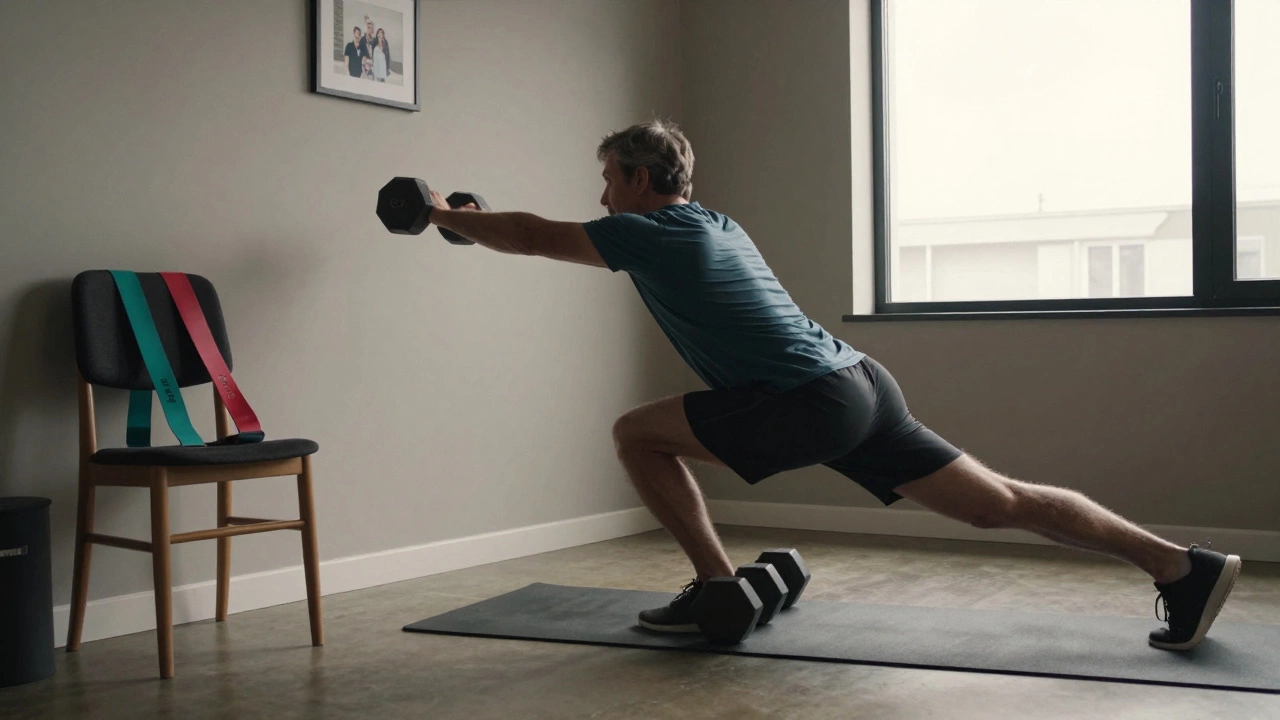
Recovery Is Part of the Routine
The most overlooked part of staying active after 40 isn’t the workout. It’s the rest. Your body doesn’t rebuild during the session. It rebuilds during the quiet hours after. Sleep isn’t optional. It’s your most powerful recovery tool. Prioritize seven to eight hours. Keep your bedroom cool, dark, and free of screens. If you wake up at night, don’t check your phone. Breathe. Read a physical book. Let your nervous system reset. Also, consider foam rolling or gentle massage twice a week. Focus on your hips, lower back, and shoulders-areas that tighten with sitting, driving, and stress. A 10-minute session with a firm foam roller can do more for your mobility than an extra hour of cardio.Hydration, Nutrition, and the Quiet Discipline of Routine
Movement doesn’t happen in a vacuum. It’s supported by what you put into your body. After 40, your metabolism slows. Your body becomes less forgiving of poor habits. That doesn’t mean you must give up your favorite meal. It means you learn to balance. Drink water first thing in the morning. Keep a bottle at your desk. Aim for 2.5 liters a day. Alcohol and caffeine dehydrate you. They also disrupt sleep. Moderation isn’t deprivation. It’s precision. Eat protein with every meal. Eggs, fish, lean meats, legumes. Protein is the building block of muscle, and your body needs more of it as you age to prevent breakdown. A 2024 meta-analysis in The American Journal of Clinical Nutrition showed that men consuming 1.6 grams of protein per kilogram of body weight daily maintained significantly more lean mass than those consuming less. Don’t obsess over macros. Just eat real food. Whole grains, vegetables, healthy fats. Avoid processed snacks that sit in your pantry like silent saboteurs.