

Mindset Assessment Tool
Answer these five scenarios honestly to discover your current mindset orientation. Each choice reveals how you approach challenges, feedback, failure, learning, and others' success.
Scenario 1: Receiving Critical Feedback
Your manager provides detailed criticism about a project you worked hard on. What is your immediate reaction?
I feel defensive and take it personally. I worry they think I'm incompetent.
I listen carefully and ask follow-up questions to understand how to improve.
Scenario 2: Facing New Technology
Your company adopts a new software system that requires significant retraining. How do you respond?
I resist the change and stick with familiar methods whenever possible.
I see it as an opportunity to learn something valuable and invest time in mastering it.
Scenario 3: Experiencing Failure
You lose an important client despite your best efforts. What happens next?
I feel ashamed and avoid discussing what went wrong with colleagues.
I analyze what happened objectively and extract lessons for future situations.
Scenario 4: Seeing Others Succeed
A colleague receives a promotion you were also hoping for. Your internal response is:
I feel threatened and question my own abilities and worth.
I feel inspired and want to understand what they did differently.
Scenario 5: Tackling Difficult Projects
A complex, challenging assignment comes up that stretches beyond your current skills. You:
I avoid it because I might not succeed and look incapable.
I embrace it as a chance to develop new capabilities through effort.
Your Mindset Profile
Interpretation
Recommended Actions
There is a persistent myth in our culture that intelligence is a fixed asset, like the cut of a bespoke suit or the pedigree of a vintage watch. You are born with it, or you are not. This static view suggests that if you did not ace your exams at sixteen, your intellectual ceiling is permanently set. But what if this assumption is entirely wrong? What if intelligence is less about raw processing power and more about how you choose to engage with the world?
The modern gentleman understands that true capability is not merely inherited; it is cultivated. It is a discipline. When we ask, is intelligence a mindset, we are really asking whether our cognitive abilities can be expanded through deliberate practice, emotional regulation, and a commitment to lifelong growth. The answer is a resounding yes. By shifting from a fixed perspective to one rooted in adaptability, you unlock potential that genetics alone could never provide.
The Myth of Fixed Potential
For decades, the concept of IQ (Intelligence Quotient) dominated conversations about human capability. Developed originally by Alfred Binet in the early 20th century to identify students who needed extra help, IQ tests were later misinterpreted as measuring innate, unchangeable worth. This led to the rise of what psychologist Carol Dweck termed the "fixed mindset." In this worldview, talent is a gift you either have or lack. If you struggle, it means you aren't smart enough. If you succeed, it confirms your superiority.
This binary thinking is dangerous for several reasons. First, it creates fragility. A man who believes his intelligence is fixed will avoid challenges where he might fail, because failure would threaten his identity. Second, it ignores the plasticity of the brain. Neuroplasticity-the brain's ability to reorganize itself by forming new neural connections throughout life-proves that we are not hardwired at birth. Every time you learn a new language, master a complex financial model, or navigate a difficult negotiation, you are physically altering your brain structure.
Consider the difference between two professionals. One relies solely on past successes, repeating strategies that worked ten years ago. The other remains curious, actively seeking feedback and adapting to new market realities. Who is truly more intelligent? The latter demonstrates higher cognitive agility, which is far more valuable in a rapidly changing world than rote memorization.
Cultivating the Growth Mindset
If intelligence is indeed a mindset, then it can be trained. Carol Dweck’s research on the "growth mindset" provides the blueprint. This approach posits that abilities can be developed through dedication and hard work. For the modern professional, this translates into specific behavioral shifts.
- Embrace Challenges: View difficult projects not as threats to your ego, but as opportunities to stretch your capabilities. A challenging client negotiation is not a risk; it is a training ground.
- Persist in Setback: Failure is data, not destiny. When a strategy fails, analyze the variables without attaching shame to the outcome.
- Effort as Pathway: Recognize that effort is not a sign of weakness but the mechanism of mastery. The most skilled individuals often work harder, not less, because they understand the value of refinement.
- Learn from Criticism: Instead of defending against constructive criticism, listen for the truth within it. It is free consulting from someone else’s perspective.
This shift requires humility. It demands that you separate your self-worth from your immediate performance. When you stop needing to look smart and start wanting to become smarter, you gain a competitive advantage that cannot be easily replicated.
Beyond IQ: The Role of Emotional Intelligence
In the realm of high-stakes leadership and sophisticated social dynamics, raw cognitive horsepower is only part of the equation. Daniel Goleman popularized the term Emotional Intelligence (EQ), which refers to the ability to recognize, understand, and manage our own emotions, and to recognize, understand, and influence the emotions of others. For the gentleman, EQ is perhaps more critical than IQ.
A man with high IQ but low EQ may solve a complex engineering problem but alienate his team in the process. Conversely, a leader with high EQ navigates office politics with grace, inspires loyalty, and de-escalates conflicts before they erupt. This form of intelligence is deeply tied to mindset. It requires active listening, empathy, and self-regulation.
| Scenario | Fixed Mindset Response | Growth Mindset Response |
|---|---|---|
| Receiving Critical Feedback | Defensive; views it as a personal attack | Curious; seeks actionable insights |
| Facing a New Technology | Resistant; prefers familiar tools | Adaptable; invests time in learning |
| Experiencing Failure | Shameful; hides mistakes | Analytical; extracts lessons |
| Seeing Others Succeed | Threatened; feels inadequate | Inspired; seeks to understand their methods |
Developing EQ involves pausing before reacting. It is the space between stimulus and response where freedom lies. By choosing your response rather than being driven by impulse, you demonstrate a higher order of intelligence. This composure is attractive, trustworthy, and effective.

Critical Thinking as a Daily Practice
Intelligence is also defined by how you process information. In an age of algorithmic feeds and echo chambers, the ability to think critically is a rare and valuable skill. Critical thinking is not about being cynical; it is about being rigorous. It involves questioning assumptions, evaluating evidence, and recognizing logical fallacies.
To sharpen this aspect of your mindset, adopt the habit of steel-manning arguments. Instead of attacking the weakest version of an opposing view (straw-manning), construct the strongest possible case for it. If you can articulate your opponent’s position better than they can, you will likely find common ground or expose genuine flaws in your own reasoning. This practice builds intellectual integrity.
Furthermore, diversify your inputs. Read philosophy alongside finance reports. Study history to understand current geopolitical tensions. Engage with people whose backgrounds differ significantly from your own. Intellectual rigidity comes from isolation; flexibility comes from exposure.
The Discipline of Continuous Learning
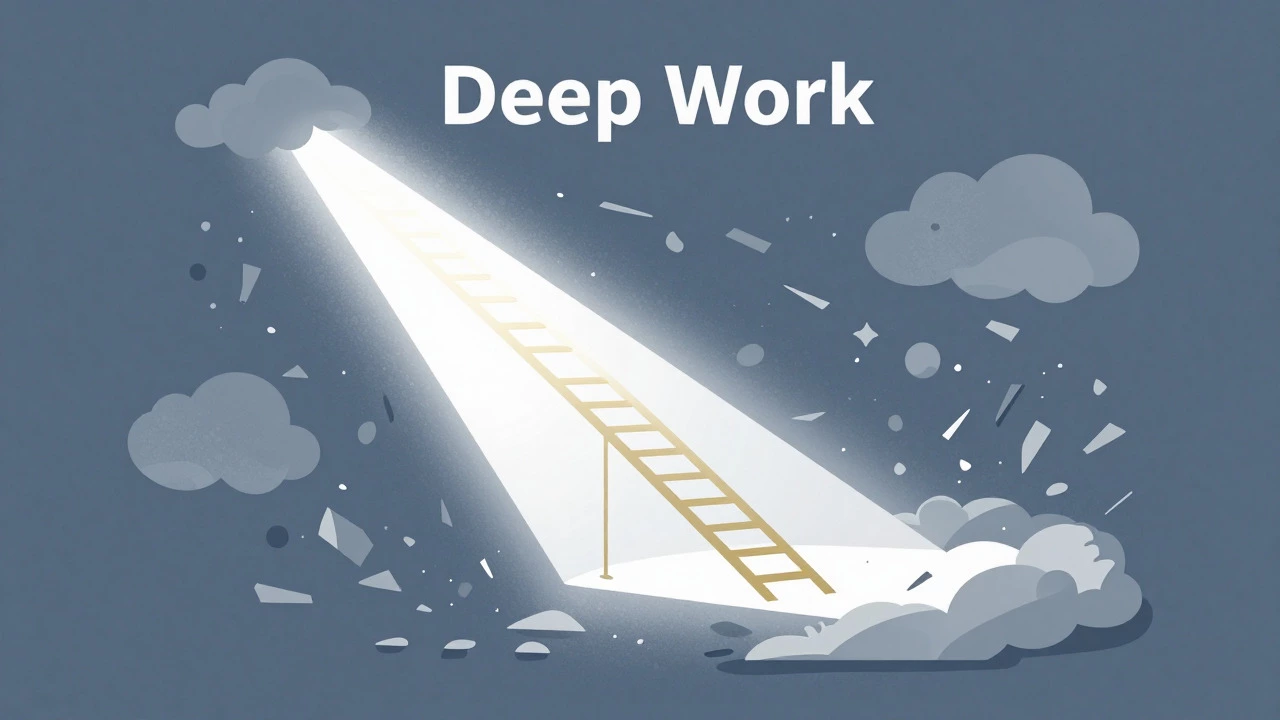
A mindset of intelligence requires fuel. That fuel is knowledge, but not just accumulated facts-it is structured understanding. The gentleman does not stop studying after university. He reads widely, attends lectures, and engages in deep work. Cal Newport’s concept of "Deep Work"-the ability to focus without distraction on a cognitively demanding task-is essential here.
In a world designed to fragment your attention, the ability to concentrate for hours on a single complex topic is a superpower. It allows you to grasp nuances that others miss. To cultivate this:
- Schedule blocks of uninterrupted time for learning.
- Minimize digital distractions during these periods.
- Choose subjects that challenge you, not just comfort you.
Remember, consistency beats intensity. Reading thirty minutes a day yields more long-term results than cramming once a month. Build rituals around learning, just as you do around grooming or fitness.
Practical Steps to Shift Your Mindset
Transforming your relationship with intelligence is not theoretical. It requires daily action. Here is how to begin:
- Audit Your Language: Replace "I’m not good at this" with "I’m not good at this yet." The word "yet" implies trajectory.
- Seek Discomfort: Once a week, do something that makes you feel intellectually vulnerable. Take a course in a subject you know nothing about. Speak up in a meeting where you disagree with the majority.
- Reflect Regularly: Journaling helps clarify thoughts. Ask yourself: What did I learn today? Where did I react emotionally instead of rationally?
- Mentor and Be Mentored: Teaching forces you to organize your knowledge. Learning from others exposes gaps in your understanding.
These small shifts compound over time. They reshape your neural pathways and, consequently, your behavior. You become someone who thrives on complexity rather than avoiding it.
Conclusion: The Gentleman’s Edge
So, is intelligence a mindset? Yes. While genetic predispositions play a role, they are not determinative. The way you perceive challenges, handle failure, and approach learning defines your functional intelligence far more than any test score ever could. By adopting a growth mindset, cultivating emotional intelligence, and committing to continuous learning, you build a resilient, adaptable mind.
This is the hallmark of the modern gentleman: not arrogance, but competence grounded in humility. Not stagnation, but evolution. In a world that rewards quick fixes, choose the slower, deeper path of genuine understanding. It is the only investment that appreciates indefinitely.
Can intelligence actually be improved in adulthood?
Yes. Thanks to neuroplasticity, the brain retains the ability to form new neural connections throughout life. By engaging in novel activities, learning new skills, and maintaining a growth mindset, adults can enhance their cognitive abilities and emotional intelligence well into old age.
What is the difference between IQ and EQ?
IQ (Intelligence Quotient) measures cognitive abilities such as logic, memory, and pattern recognition. EQ (Emotional Intelligence) measures the ability to perceive, control, and evaluate emotions. While IQ helps you solve technical problems, EQ helps you navigate social complexities and lead effectively.
How does a growth mindset affect career success?
A growth mindset leads to greater resilience, adaptability, and willingness to take on challenges. Professionals with this mindset view failures as learning opportunities, making them more innovative and better equipped to handle the uncertainties of the modern workplace compared to those with a fixed mindset.
Is emotional intelligence innate or learned?
While some people may have a natural predisposition towards empathy, emotional intelligence is largely a learned skill. It can be developed through practices like active listening, mindfulness, seeking feedback, and consciously managing one's emotional responses in stressful situations.
What are practical ways to develop critical thinking?
To develop critical thinking, question your own assumptions, seek out diverse perspectives, practice steel-manning opposing arguments, and analyze evidence before drawing conclusions. Regularly exposing yourself to complex topics and philosophical debates also sharpens this skill.