

Self-Improvement Strategy Analyzer
Select your options above and click "Analyze My Strategy" to receive personalized insights based on the article's framework.
You wake up early. You read for twenty minutes. You go to the gym. You review your finances. On paper, you are doing everything right. Yet, six months later, you feel exactly where you started. The routine is there, but the transformation isn’t. Why?
The problem isn't your effort. It’s your definition of self-improvement. Most men treat it as a destination-a box to check off once they’ve built the perfect schedule. But self-improvement is not a goal. It is a meta-skill. It is the ability to learn how to learn, to adapt, and to refine yourself continuously. Just like playing the piano or coding in Python, it requires deliberate practice, feedback loops, and patience.
The Myth of the Fixed Self
We grow up believing that talent is innate. Some people are just "disciplined," while others are "lazy." This fixed mindset is the enemy of progress. In reality, discipline is a muscle, not a personality trait. When you understand that self-improvement is a skill, you stop judging yourself for lacking willpower and start training your capacity for change.
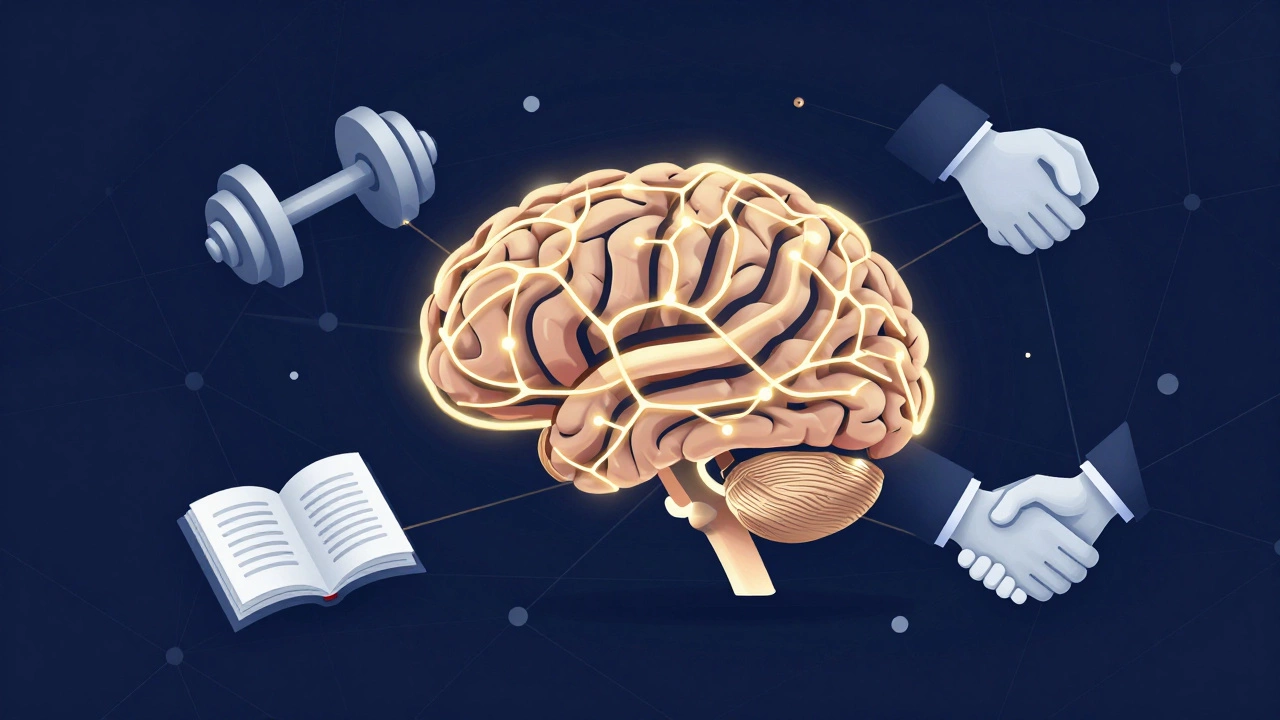
Consider the concept of neuroplasticity. Your brain physically changes when you repeat new behaviors. Every time you choose to read instead of scroll, or to speak kindly instead of reacting with anger, you strengthen specific neural pathways. Over time, these choices become automatic. This is not magic; it is biology. The man who seems effortlessly composed has simply spent years wiring his brain for calmness. You can do the same.
Deliberate Practice vs. Mindless Routine
There is a vast difference between going through the motions and actually improving. If you lift weights without increasing resistance or changing form, you maintain strength-you don’t build it. The same applies to personal growth. Many men fall into the trap of "mindless routine." They journal every day but never reflect on patterns. They meditate but never observe their thoughts critically.
To turn self-improvement into a true skill, you must apply deliberate practice. This means:
- Specific Goals: Don't just "be better." Aim to reduce reactive anger by 50% in high-stress meetings.
- Immediate Feedback: Record your conversations. Ask trusted mentors for honest critiques. Review your journal entries weekly to spot recurring emotional triggers.
- Correction: Adjust your approach based on data, not ego. If a morning routine fails because you’re exhausted, shorten it. Don’t blame your character; optimize the system.
This shift from vague intention to precise execution is what separates the amateur from the master. It transforms self-help from a hobby into a craft.
The Role of Emotional Intelligence
A gentleman knows that technical skills get you hired, but emotional intelligence (EQ) gets you respected. EQ is arguably the most critical component of self-improvement. It involves recognizing your own emotions and understanding those of others. Without this skill, all other improvements are fragile. You might have the best career strategy, but if you cannot manage stress or communicate effectively, your foundation will crack under pressure.
Practicing EQ looks like pausing before responding in an argument. It means listening to understand, not to reply. It requires vulnerability-admitting when you are wrong or when you need help. These actions feel uncomfortable at first because they challenge our instinct for self-protection. But like any skill, comfort comes with repetition. Start small. In your next disagreement, ask one clarifying question before stating your position. Notice how the dynamic shifts.
Building Systems, Not Just Goals
Goals are important, but systems are sustainable. A goal is "lose ten pounds." A system is "eat vegetables at every dinner and walk for thirty minutes after work." James Clear, author of *Atomic Habits*, argues that you do not rise to the level of your goals; you fall to the level of your systems. This is a crucial insight for anyone serious about self-mastery.
Think of your life as a business. Would you run a company based solely on annual revenue targets? No. You would focus on daily operations, customer service, and product quality. Apply this logic to yourself. Instead of obsessing over being "successful," focus on the daily inputs: reading, exercising, connecting with loved ones, and managing your time wisely. When the system is solid, the results follow naturally.
| Aspect | Goal-Oriented Approach | System-Oriented Approach |
|---|---|---|
| Focus | Outcome (e.g., Get a promotion) | Process (e.g., Deliver high-quality work consistently) |
| Motivation | Sporadic, tied to deadlines | Consistent, tied to identity |
| Failure Response | Discouragement, quitting | Debugging, adjusting the process |
| Long-term Result | Burnout after achievement | Compound growth over time |
The Importance of Reflection
You cannot improve what you do not measure. Reflection is the feedback loop that turns experience into wisdom. Many men go years without a serious conversation with themselves. They let days blur together, reacting to external demands rather than steering their own course.
Implement a weekly review. Take thirty minutes every Sunday evening to ask three questions:
- What went well this week?
- Where did I lose my composure or waste time?
- What is one small adjustment I can make next week?
Write the answers down. Do not judge them. Treat them as data points. Over time, you will see patterns emerge. Perhaps you notice that you are always irritable on Mondays because you didn’t sleep well on Sundays. Or maybe you realize that your best work happens in the late afternoon, not the early morning. Use this information to redesign your environment and schedule. This is the essence of self-mastery: aligning your actions with your insights.

Overcoming the Plateau
Every skill plateaus. After the initial excitement of new habits wears off, progress slows. This is where most men quit. They expect linear growth, but real improvement is exponential. It starts slow, then accelerates. The plateau is not a sign of failure; it is a sign that you are integrating the skill into your identity.
When you hit a wall, change the stimulus. If you’ve been running the same route for months, try interval training. If you’ve been reading self-help books, switch to biographies or philosophy. Seek new challenges. Engage with mentors who are further along the path. The key is to stay curious. Curiosity keeps the mind flexible and prevents stagnation. Remember, the goal is not to reach a final state of perfection, but to enjoy the journey of becoming.
Patience as a Strategic Asset
In a world obsessed with instant gratification, patience is a radical act. Self-improvement takes time. Building a strong physique takes years. Developing deep relationships takes decades. Mastering a profession takes a lifetime. Accepting this timeline reduces anxiety and allows you to focus on the present moment.
Trust the process. Show up every day, even when you don’t feel like it. Especially when you don’t feel like it. Discipline is doing what needs to be done, regardless of mood. As you practice this, you will find that your moods begin to align with your actions. Confidence grows not from affirmations, but from keeping promises to yourself. Each small victory builds trust in your own character. That trust is the foundation of a life well-lived.
Is self-improvement a natural talent or a learned skill?
Self-improvement is primarily a learned skill. While some individuals may have a predisposition toward curiosity or discipline, everyone can develop the capacity for growth through deliberate practice, consistent habits, and reflective feedback loops. It is not an innate trait reserved for the gifted.
How long does it take to see results from self-improvement efforts?
Results vary depending on the area of focus. Physical changes may appear in weeks, while shifts in mindset or professional mastery can take years. The key is to focus on consistency rather than speed. Small, daily improvements compound significantly over time, often leading to breakthroughs that seem sudden but were built gradually.
What is the biggest mistake men make when trying to improve themselves?
The most common mistake is trying to change too much at once. Men often overhaul their diet, workout routine, career strategy, and social habits simultaneously. This leads to burnout and abandonment. Effective self-improvement focuses on one or two key areas at a time, allowing new behaviors to become automatic before adding more complexity.
Can self-improvement lead to arrogance or superiority complexes?
It can, if the motivation is ego-driven. True self-improvement is rooted in humility and service. It aims to make you a better partner, father, colleague, and citizen. When you view growth as a way to contribute more to the world, rather than to elevate yourself above others, you avoid the trap of arrogance. Stay grounded by focusing on your flaws and areas for growth, not just your achievements.
How do I stay motivated when progress feels slow?
Shift your focus from outcomes to identity. Instead of asking "Have I lost weight yet?" ask "Am I the type of person who eats healthy?" Motivation fluctuates, but identity remains stable. Celebrate small wins and track your inputs (actions taken) rather than just outputs (results achieved). Connecting with a community of like-minded individuals can also provide accountability and encouragement during difficult periods.