

Personal Growth & Relationship Balance Audit
Assess your current state. Don't focus on the total hours, but on the quality of presence. Select the statements that best describe your last 7 days.
Personal Sovereignty (Self)
Relationship Presence (Partner)
Your Balance Profile
The Myth of the Perfect Split
We often talk about balance as if it is a static scale, where an equal amount of weight on both sides creates stability. But in reality, trying to split your time perfectly between your own ambitions and your partner is a recipe for frustration. You cannot give exactly 50% of your energy to your career, 50% to your partner, and still have something left for your health or your thoughts. It simply doesn't work that way.
The real goal isn't a mathematical split, but a fluid integration. It is about knowing when to lean into your personal growth-whether that is mastering a new skill, hitting a fitness milestone, or finding silence in a busy city-and when to be fully present for the people who matter. The tension you feel when your personal goals clash with your relationship isn't a sign of failure; it is a sign that you are evolving. The challenge is to evolve without leaving your partner behind.
Key Takeaways for the Modern Man
- Balance is a dynamic flow, not a fixed percentage of time.
- Quality of presence outweighs the quantity of hours spent together.
- Clear boundaries prevent resentment in both personal and shared spaces.
- Emotional intelligence is the primary tool for navigating conflict.
- Self-care is not selfish; it is the fuel that allows you to show up for others.
Defining Your Personal Sovereignty
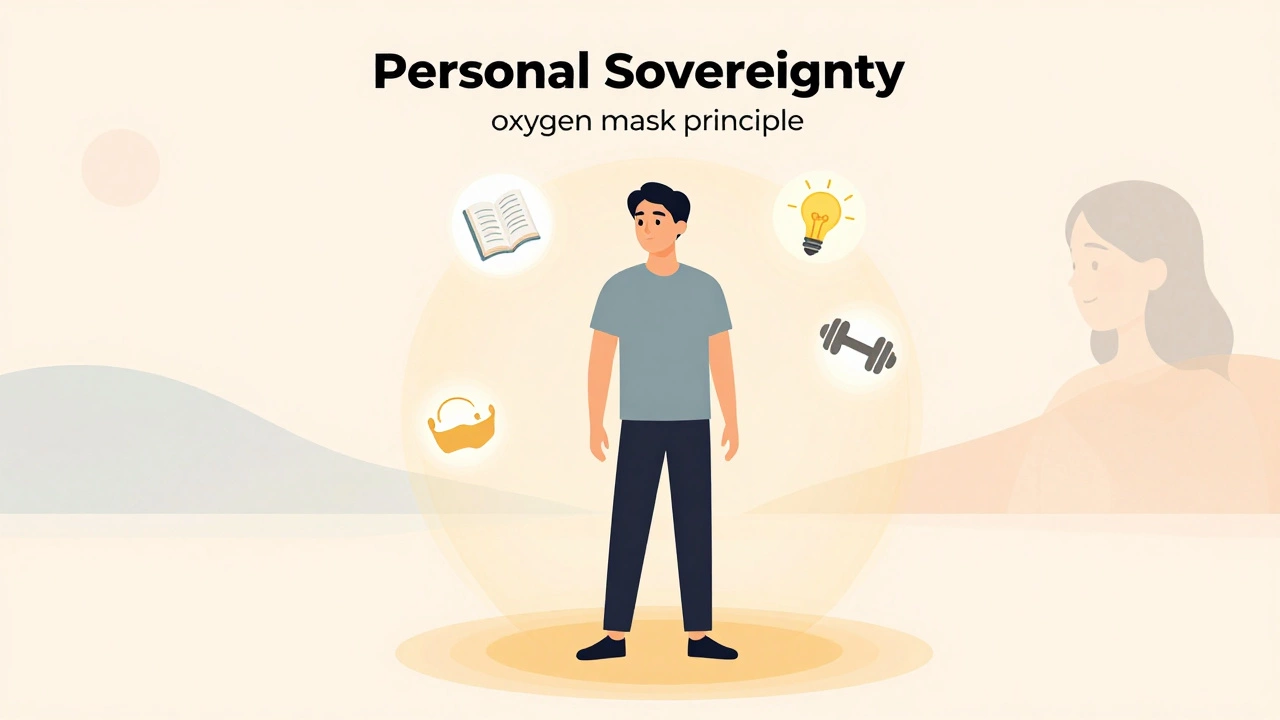
Before you can balance a relationship, you must understand what you are balancing it against. Personal Sovereignty is the capacity to maintain one's own identity, values, and mental health independently of a partner's influence or needs. When a man loses his sovereignty, he often becomes a shadow of his partner, which eventually leads to a loss of attraction and respect from both sides.
Think of it as the oxygen mask principle on a flight. If you are depleted, exhausted, or resentful because you've neglected your own interests, you have nothing of value to offer your relationship. A gentleman understands that his pursuit of excellence-whether in the gym, the office, or through a private hobby-makes him a more interesting and stable partner. If you stop reading, stop learning, or stop challenging yourself, you bring less to the table.
The pitfall here is the "all-or-nothing" approach. Some men swing from being completely absorbed in their work to being overly clingy in their downtime. The key is consistency. Carve out non-negotiable blocks of time for your own growth. Whether it is a 6 AM workout or an hour of reading before bed, these anchors keep you grounded.
The Art of Quality Presence
The most common mistake men make is confusing "being there" with "being present." You can spend four hours on the sofa next to your partner while scrolling through your phone, and yet be completely absent. This is where the friction starts. Your partner doesn't actually want more of your time; they want more of your attention.
To achieve a true work life balance, you must implement a policy of radical presence. When you are in your "personal" zone-working on a project or exercising-be there 100%. When you transition into the "relationship" zone, leave the digital noise behind. Putting the phone in another room for two hours of undivided conversation is more valuable than ten hours of distracted companionship.
Consider the concept of Active Listening. This is the practice of fully concentrating on what is being said rather than just passively hearing the words. By applying this, you satisfy the emotional needs of your partner in a fraction of the time, which actually frees up more space for your individual pursuits.
| Scenario | Proximity (Low Value) | Presence (High Value) | Outcome |
|---|---|---|---|
| Dinner Date | Checking emails under the table | Phone off, focused eye contact | Deepened intimacy and trust |
| Weekend Trip | Planning work tasks in your head | Engaging with the environment/partner | Mental reset and shared memories |
| Evening at Home | Sitting in the same room, separate screens | 30 minutes of focused catch-up | Reduced conflict and feeling valued |
Establishing Respectful Boundaries
Boundaries are not walls to keep people out; they are gates that let the right things in at the right time. In a relationship, boundaries are the rules of engagement that protect your mental space. Many men avoid setting boundaries because they fear it will seem cold or uncaring. In reality, the opposite is true. Without boundaries, you will eventually snap, leading to an outburst that causes far more damage than a polite request for space would have.
Start by communicating your needs during a time of peace, not during a conflict. Instead of saying, "I need you to leave me alone," try, "I have a high-focus project for the next two hours. I'm going to step into the study so I can finish this and then give you my full attention for dinner." This frames your personal time as a way to improve the quality of your time together.
This approach utilizes Emotional Intelligence, which is the ability to manage your own emotions and understand those of others to navigate social complexities. When you frame your boundaries as a benefit to the relationship, you remove the perceived threat of rejection. You aren't pushing your partner away; you are creating a sustainable structure for your shared life.
Navigating the Conflict of Ambition
There will be seasons in a man's life where the balance shifts. Perhaps you are launching a business, studying for a certification, or navigating a career pivot. During these times, the "balance" will inevitably lean toward your personal and professional goals. The danger here is the assumption that your partner will simply "understand" without a roadmap.
The solution is a shared vision. If your partner understands that the current imbalance is a temporary investment for a collective future gain, they are more likely to support you. If they feel they are just a casualty of your ambition, they will become an obstacle to your progress.
Schedule a "State of the Union" conversation once a month. Discuss your goals for the coming weeks and ask your partner what they need from you during this period. This prevents the build-up of resentment. If you know you'll be working late for three weeks on a project, plan a high-impact reward-like a weekend getaway or a special dinner-once the project concludes. This proves that while your time is limited, your commitment is not.

The Role of Mental Resilience in Partnership
Maintaining this balance requires Mental Resilience, defined as the psychological capacity to adapt to stressful situations and bounce back from adversity without losing one's composure. There will be days when you fail. You'll be too tired to listen, or you'll neglect your gym routine for a month. The mark of a gentleman is not perfection, but the ability to course-correct.
Avoid the trap of guilt. Guilt is an unproductive emotion that leads to "over-compensating." When you over-compensate, you often give in to things you don't want to do, which creates a cycle of resentment. Instead, practice accountability. A simple, "I know I've been distant lately; I appreciate your patience, and I want to make it up to you this Friday," is more effective than a thousand apologies followed by the same behavior.
Focus on the small, consistent wins. A relationship doesn't always need grand gestures; it needs the reliability of a man who knows how to manage himself. When you are in control of your own habits and emotions, you provide a stable foundation for your partner to lean on.
How do I tell my partner I need more alone time without hurting them?
The key is to separate the need for space from the feeling toward the partner. Explain that your need for solitude is about recharging your own battery so that you can be a better partner. Use "I" statements: "I find that I'm much more present and engaged when I've had an hour of quiet to myself," rather than "You are too demanding of my time." Frame it as a tool for relationship health, not a escape from it.
What if my partner doesn't respect my boundaries?
This usually indicates a lack of security or a misunderstanding of the boundary's purpose. Reiterate the boundary calmly and consistently. If they push through, do not reward the behavior by giving in. Instead, have a deeper conversation about trust and respect. A healthy relationship requires both partners to respect the other's individuality. If a partner consistently disregards your boundaries, it may be time to evaluate if your values and needs are truly aligned.
Can I still maintain a high-intensity career and a healthy relationship?
Yes, but it requires a shift from quantity to quality. High-achievers cannot afford to waste time. Apply the same efficiency to your relationship that you do to your business. Use calendars for dates, be radically present when you are together, and communicate your "crunch periods" in advance. The goal is not to work fewer hours, but to ensure the hours you spend with your partner are high-impact and emotionally rewarding.
How do I handle the guilt of focusing on my personal goals?
Recognize that self-improvement is a service to your partner. A man who is healthy, confident, and fulfilled is a significantly better companion than one who is stagnant and resentful. Shift your perspective: your personal growth isn't taking away from the relationship; it is adding a better version of you to the relationship. As long as your partner's basic emotional needs are met, your pursuit of excellence should be encouraged.
What is the best way to reconnect after a period of imbalance?
Avoid the "grand gesture" trap, which can feel performative. Instead, focus on consistent, small acts of attentiveness. Ask deep questions about their life, take a load off their daily chores without being asked, and schedule a few dedicated dates where the focus is entirely on them. Acknowledge the period of imbalance honestly and express gratitude for their support. Consistency over time rebuilds the bridge faster than one expensive gift.
Next Steps for Implementation
If you feel the scale has tipped too far in one direction, start with a small audit. For the next seven days, track how much time you spend on your own growth versus how much time you spend in active, present engagement with your partner. You might be surprised to find that you spend a lot of time in "proximity" but very little in "presence."
Next, identify one "anchor" activity for yourself-something that makes you feel like your best self-and schedule it into your week. Then, identify one "anchor" activity for your relationship and protect that time with the same intensity you would a board meeting. By securing the extremes, you create a stable middle ground where both your personal identity and your relationship can thrive.