
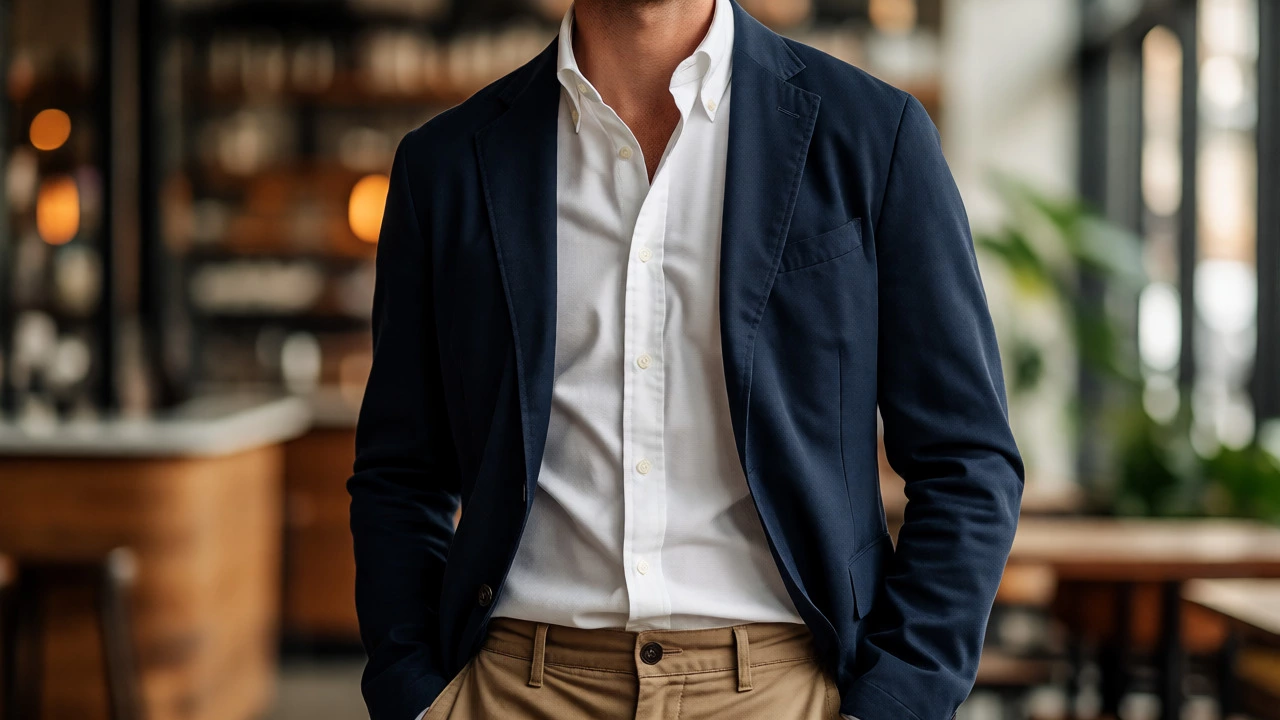
Smart Casual Outfit Builder
Not sure what to wear? Select your event type and current weather below to generate a recommended smart casual ensemble that balances professionalism with comfort.
You have probably been there. You receive an invitation that says "Smart Casual," and suddenly your closet feels like a trap. Is it the suit? No, too formal. Is it jeans and a t-shirt? Too sloppy. This ambiguity is where most men lose points before they even walk into the room. Smart casual is not just a dress code; it is a specific aesthetic balance between professional polish and relaxed comfort. It signals that you respect the occasion but do not need armor to feel confident.
The goal here is simple: look put-together without looking like you are trying too hard. For the modern gentleman, this means curating a wardrobe that transitions seamlessly from a Friday afternoon meeting to a weekend dinner. It requires understanding fabrics, fit, and context. Let us break down exactly how to master this elusive style without losing your individuality or your comfort.
Decoding the Ambiguity of Smart Casual
Why does this term confuse so many people? Because it sits in the gray area between two rigid categories: Business Casual, which leans toward office professionalism, and Casual Wear, which prioritizes ease above all else. Smart casual borrows the structure of business attire but relaxes the rules.
Think of it as the visual equivalent of a firm handshake with a warm smile. You want to appear approachable yet capable. If you wear a full three-piece suit to a smart casual event, you might seem stiff or out of touch. If you show up in athletic wear, you signal indifference. The sweet spot lies in tailored separates that stand alone as strong pieces but work together harmoniously.
A common mistake is assuming smart casual means "nice clothes." It does not. A wrinkled expensive shirt is still a wrinkled shirt. Smart casual demands maintenance. Your clothes must be clean, pressed, and free of pilling. The fabric quality matters more than the brand label. A well-made cotton oxford shirt will always outperform a flashy polyester blend in this context.
The Core Pillars: Fit, Fabric, and Function
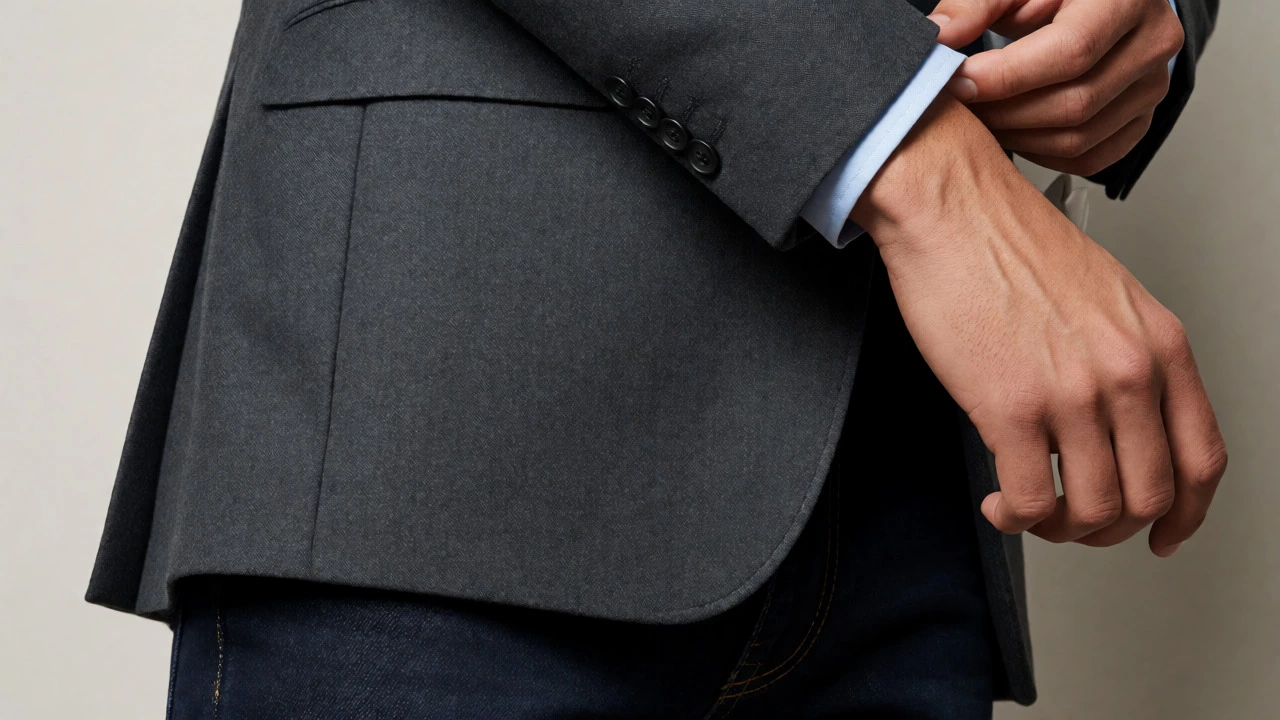
If you remember nothing else, remember this: fit is king. In smart casual dressing, off-the-rack rarely works perfectly. You do not need bespoke tailoring for every item, but you should budget for alterations. A jacket that pulls at the shoulders or trousers that bunch at the ankles ruin the illusion of effortlessness.
- Jackets: Aim for a shoulder seam that ends exactly where your natural shoulder ends. Sleeves should show about half an inch of shirt cuff.
- Trousers: They should skim the body, not hug it tightly nor hang loosely. A slight taper towards the ankle looks modern and sharp.
- Shirts: The collar should allow one finger between the neck and the fabric. Too tight looks constricting; too loose looks sloppy.
Fabric choice dictates the season and the vibe. During warmer months, opt for breathable materials like linen blends, lightweight wool, or high-quality cotton poplin. These fabrics drape naturally and resist stiffness. In cooler weather, heavier wools, corduroy, and tweed add texture and warmth without bulk. Avoid shiny synthetic fabrics unless they are part of a technical performance piece, as they often read as "cheap" under harsh lighting.
Functionality also plays a role. Smart casual outfits should allow movement. You might need to reach for a file, shake hands vigorously, or sit for long periods. Restrictive cuts hinder confidence. Choose garments with a bit of stretch or cut generously enough to move with you, while maintaining their shape when stationary.
Building Your Capsule Wardrobe
You do not need a hundred items to achieve this look. You need ten excellent ones. A capsule wardrobe reduces decision fatigue and ensures every piece works with multiple others. Start with neutral foundations: navy, grey, white, beige, and black. These colors mix effortlessly and project stability and calm.
| Item Category | Recommended Choice | Why It Works |
|---|---|---|
| Jacket | Navy Blazer or Unstructured Sport Coat | Adds structure instantly; versatile enough for evening events. |
| Trousers | Chinos (Khaki/Navy) or Dark Denim | Bridges the gap between formal slacks and casual jeans. |
| Shirt | Oxford Cloth Button-Down (OCBD) | Textured fabric looks intentional, not accidental. |
| Footwear | Leather Loafers or Minimalist Sneakers | Comfortable yet refined; avoids the heaviness of dress shoes. |
| Layer | Fine-Gauge Knit or Quarter-Zip | Adds depth and warmth without adding bulk. |
The Navy Blazer is the cornerstone of this style. Unlike a suit jacket, it is designed to be worn separately. Look for unstructured models with softer shoulders. This makes them less intimidating and more comfortable for all-day wear. Pair it with chinos for daytime meetings or dark denim for evening drinks.
For bottoms, Chinos are the unsung heroes. They offer the neat appearance of trousers but the comfort of casual pants. Stick to solid colors without distressing, holes, or heavy fading. If you prefer denim, ensure it is dark wash, straight-leg or slim-taper, and completely free of rips. Light blue, acid-washed jeans belong on weekends, not in smart casual settings.
Context Matters: Adjusting for Occasion
Not all smart casual events are created equal. A tech startup office differs vastly from a gallery opening or a client lunch. You must read the room before you get dressed.
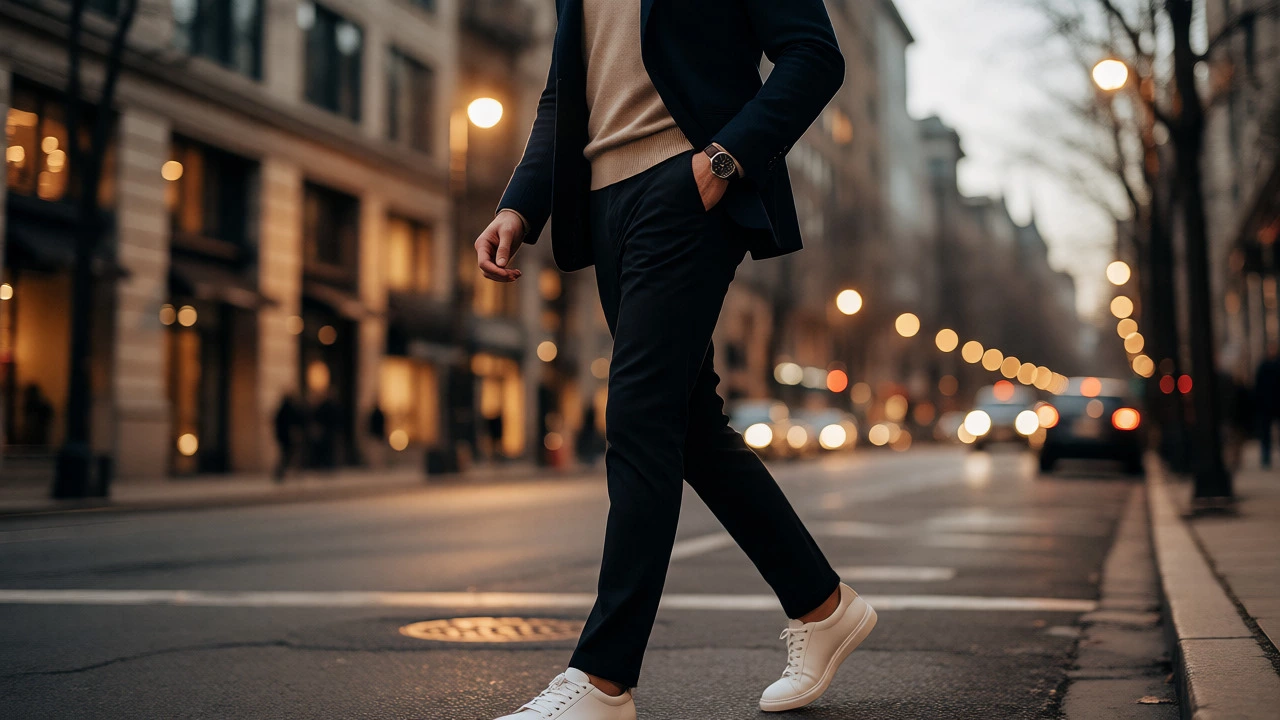
In creative industries or startups, you have more latitude. Here, Minimalist Sneakers in white leather can replace loafers. A high-quality plain t-shirt under an open button-down shirt can replace a traditional collared shirt. The key is cleanliness and condition. Your sneakers must be spotless. Your t-shirt must fit perfectly around the arms and chest.
For conservative environments like law firms or finance, lean closer to business casual. Keep the blazer on. Wear a tie if the culture expects it, though usually, an open collar suffices. Avoid shorts entirely, regardless of the temperature. Closed-toe leather shoes are non-negotiable here. Socks should match your trousers or shoes, never disappear entirely unless you are wearing loafers intentionally.
Evening events allow for slightly darker tones and richer textures. Swap the light cotton shirt for a silk-blend or fine merino wool knit. Add a pocket square for a touch of personality. It shows attention to detail without screaming for attention. Remember, subtlety is the hallmark of true elegance.
Grooming and Accessories: The Finishing Touches
Your outfit stops at your skin. Grooming completes the look. A messy haircut or unkempt beard undermines even the best-tailored suit. Keep hair neatly trimmed and styled simply. Facial hair should be shaped and conditioned. Use beard oil to prevent dryness and flakiness, which distract from your face.
Accessories should enhance, not dominate. A classic watch with a leather strap adds sophistication. Avoid large, sporty digital watches unless appropriate for the specific setting. Belts should match your shoe color-brown with brown, black with black. This rule seems archaic, but it creates visual continuity that the eye appreciates subconsciously.
Scent is another invisible accessory. Choose a subtle fragrance. You want people to notice it only when they are close, not when they enter the room. Overpowering cologne can be aggressive and off-putting in social or professional interactions. Less is always more.
Finally, consider your posture and demeanor. Clothes frame the person, but the person carries the clothes. Stand tall. Make eye contact. Speak clearly. Confidence comes from knowing you look appropriate for the situation. When you stop worrying about whether you are overdressed or underdressed, you can focus on the conversation and the experience.
Pitfalls to Avoid
Even experienced dressers stumble occasionally. Watch out for these common errors:
- Wearing Athletic Wear: Hoodies, sweatpants, and running shoes rarely qualify as smart casual, no matter how expensive they are.
- Ignoring Footwear Condition: Scuffed or dirty shoes ruin an otherwise perfect outfit. Polish or clean them regularly.
- Over-accessorizing: Too many bracelets, rings, or loud patterns create visual noise. Pick one focal point.
- Ill-Fitting Jackets: A jacket that is too long or too short changes your proportions negatively. Get it altered.
- Wrinkled Fabrics: Steam your shirts and trousers. Wrinkles suggest haste or neglect.
By avoiding these traps, you maintain the air of effortless competence that defines the smart casual ideal. It is not about following rigid rules blindly; it is about understanding why those rules exist-to communicate respect, capability, and self-awareness.
Can I wear jeans for smart casual?
Yes, but choose wisely. Opt for dark-wash, slim-fit jeans without rips or excessive fading. Pair them with a structured blazer and leather boots or clean minimalist sneakers to elevate the look beyond casual weekend wear.
Do I need to wear a tie for smart casual?
Generally, no. Smart casual typically allows for an open-collar shirt. However, in very conservative settings, a knit tie or a casual silk tie can add a layer of formality if you wish to err on the side of caution. Observe the host or company culture first.
What shoes are appropriate for smart casual?
Leather loafers, derby shoes, brogues, and clean, minimalist white leather sneakers are standard choices. Avoid heavy hiking boots, flip-flops, or worn-out athletic trainers. Ensure your shoes are clean and well-maintained.
Is a polo shirt considered smart casual?
A high-quality polo shirt can fit into smart casual, especially in warmer climates or less formal offices. Choose a solid color with a structured collar that stands up on its own. Tuck it in if paired with chinos or trousers for a neater appearance.
How does smart casual differ from business casual?
Business casual is stricter, often requiring dress trousers, button-down shirts, and sometimes jackets in a corporate environment. Smart casual is more flexible, allowing for higher-end denim, stylish sneakers, and bolder personal expression while still maintaining a polished appearance.