

Relationship Dynamics Simulator
Select a common relationship challenge and choose how you would typically respond to see the likely outcome on connection and trust.
There is a persistent myth among men that stoicism equals invincibility. We are taught from a young age to keep our cards close to our chests, to project an image of unshakeable confidence, and to view any display of uncertainty as a crack in the foundation. But consider this: if you never show your partner who you truly are beneath the tailored suit and the composed exterior, how can they ever love you? They might love the persona, the provider, or the protector, but not the man himself.
Vulnerability is often misunderstood as weakness. In reality, it is a calculated risk of emotional exposure that requires significant courage. It is the act of letting someone see your doubts, your fears, and your needs without armor. For the modern gentleman, mastering this skill is not about becoming soft; it is about building a connection so deep and resilient that it can withstand the inevitable storms of life. Without vulnerability, relationships remain superficial transactions rather than profound partnerships.
The Paradox of Control
Many high-achieving men struggle with vulnerability because they equate it with a loss of control. In business, we mitigate risk by hiding weaknesses until we have a solution. In relationships, however, hiding weaknesses prevents intimacy from taking root. When you withhold your true feelings, you create a barrier. Your partner may sense the distance but cannot cross it because you have not lowered the drawbridge.
Think of it like wearing a heavy coat indoors. You might look polished and prepared, but you are uncomfortable, and you prevent genuine touch. Vulnerability is the act of removing that coat. It feels exposed at first, yes. The air hits your skin, and you feel cooler, perhaps even shivering slightly. But only then can you experience warmth from another person. If you remain buttoned up, you remain alone, regardless of who is standing next to you.
| Attribute | Stoic Detachment (Myth) | Authentic Vulnerability (Reality) |
|---|---|---|
| Primary Goal | Avoid pain and judgment | Foster trust and intimacy |
| Emotional State | Numbness or suppressed tension | Clarity and acceptance |
| Partner's Reaction | Confusion or emotional distance | Empathy and deeper connection |
| Long-term Outcome | Burnout or isolation | Resilient partnership |
Redefining Masculine Strength
We need to recalibrate what strength looks like. Historically, male strength was defined by physical capacity or economic provision. Today, in complex interpersonal dynamics, strength is measured by emotional intelligence. A man who can articulate his fear of failure is stronger than one who masks it with anger or silence. This does not mean you must share every fleeting insecurity with everyone you meet. That is oversharing, not vulnerability. True vulnerability is selective and intentional.
It is about choosing the right moment and the right person to reveal a part of yourself that matters. When you admit to your partner that you felt inadequate during a recent career setback, you are not asking them to fix it. You are inviting them into your inner world. This invitation signals trust. And trust is the currency of lasting relationships. Without it, you are merely roommates sharing a mortgage.
The Science of Connection
This isn't just poetic philosophy; there is biological weight to this argument. Research led by Dr. Brené Brown, a prominent researcher on shame and empathy, suggests that vulnerability is the birthplace of innovation, creativity, and change. More specifically, when we engage in vulnerable communication, we activate mirror neurons in our partners. These neurons allow us to literally feel what the other person is feeling. When you suppress emotion, you dampen this neural resonance.
Consider the physiology of stress. When you bottle up anxiety, your cortisol levels remain elevated. This chronic stress impacts sleep, health, and patience-three pillars of a healthy domestic life. By expressing these feelings verbally, you engage the prefrontal cortex, which helps regulate the amygdala (the brain's alarm system). In simpler terms: speaking your truth calms your nervous system. It makes you a better listener, a more patient father, and a more present husband.
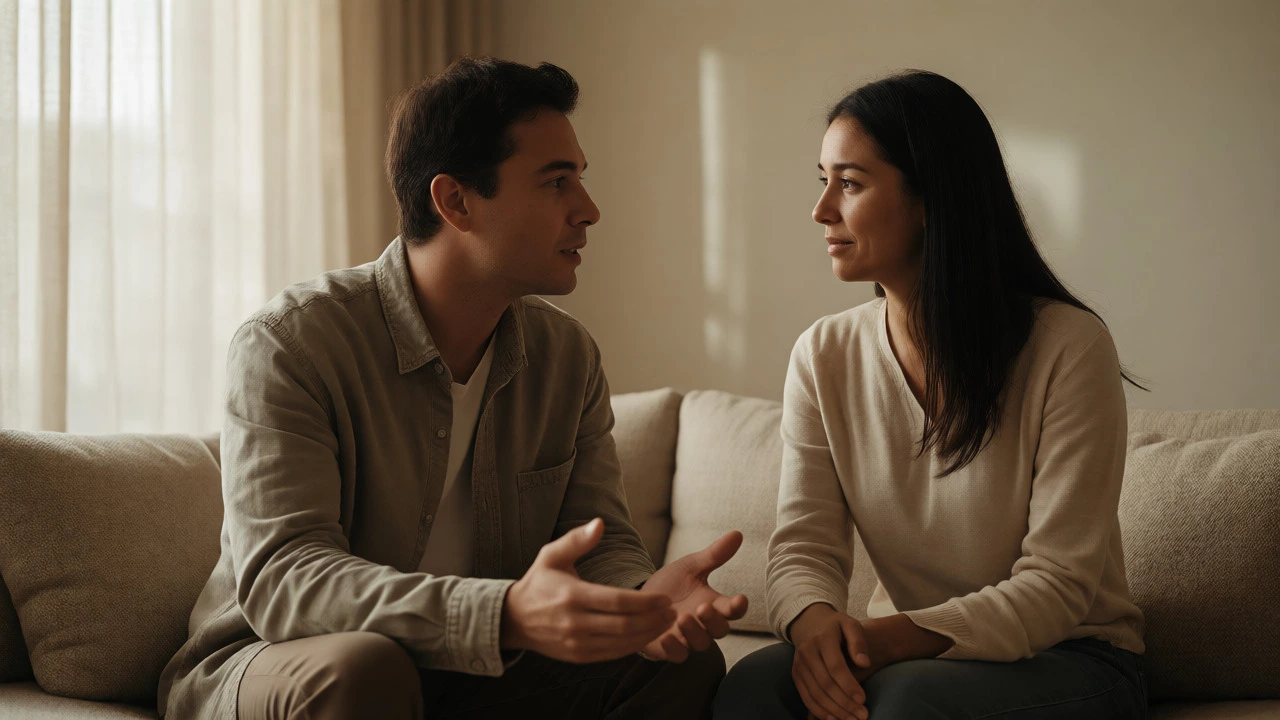
Practical Steps to Cultivate Openness
If you are new to this, jumping into deep emotional disclosure can feel daunting. Start small. You do not need to confess your deepest childhood traumas over dinner tonight. Build the muscle gradually through consistent, low-stakes honesty.
- Name the Emotion: Instead of saying "I'm fine," try "I'm feeling a bit overwhelmed by work." This is factual, not dramatic.
- Use "I" Statements: Frame your vulnerability around your own experience. "I feel disconnected when we don't talk after work" is less accusatory than "You never listen to me."
- Ask for What You Need: Vulnerability often includes admitting dependency. It is perfectly gentlemanly to say, "I need some reassurance today," or "I'd appreciate your perspective on this."
- Listen Actively: When your partner shares their vulnerability, resist the urge to solve it immediately. Often, they just need to be heard. Hold space for their feelings before offering solutions.
Notice how these steps do not require you to collapse or cry publicly. They require clarity and presence. A gentleman listens more than he speaks, but when he speaks, he speaks honestly.
Overcoming the Fear of Judgment
The biggest hurdle to vulnerability is the fear that revealing your flaws will make you less attractive or less respected. This is rarely the case. In fact, perfection is intimidating and distant. Flaws are relatable. When you admit a mistake or a fear, you humanize yourself. You give your partner permission to be imperfect too.
Imagine two scenarios. In Scenario A, you pretend everything is under control despite a major financial worry. Your partner senses your tension but doesn't know why. They might interpret your irritability as disinterest. In Scenario B, you sit down and say, "I'm worried about the market volatility affecting our portfolio. I'm trying to stay calm, but I wanted you to know it's weighing on me." In Scenario B, your partner can offer support, distraction, or simply solidarity. The burden is shared, not hidden. The relationship becomes a team effort rather than a solo performance.

The Role of Boundaries
Crucially, vulnerability is not a free-for-all. It respects boundaries. You share deeply with those who have earned the right to hear it. With colleagues or acquaintances, professional courtesy and discretion are appropriate. With a long-term partner, transparency builds the bedrock of trust. Confusing these contexts leads to discomfort. A gentleman knows where to draw the line between privacy and secrecy.
Privacy is keeping things to yourself because they are personal. Secrecy is hiding things because you are ashamed or afraid. Vulnerability dissolves secrecy. It transforms hidden shame into shared understanding. This distinction is vital for maintaining dignity while fostering closeness.
Building a Legacy of Emotional Health
Finally, consider the ripple effect. How you handle emotions sets the tone for your household. If you are a father, your sons watch how you process frustration and sadness. If you model suppression, they learn to suppress. If you model healthy expression, they learn that emotions are manageable data points, not enemies. You are not just improving your marriage; you are shaping the emotional literacy of the next generation.
This is the quiet power of the modern gentleman. He does not need to shout to be heard. He does not need to hide to be strong. He stands firm in his values, yet open in his heart. He understands that true resilience comes from flexibility, not rigidity. By embracing vulnerability, you do not lose your edge; you sharpen your connection to the people who matter most.
Is vulnerability the same as being needy?
No. Needy implies relying on others for validation or emotional regulation. Vulnerability is about sharing your internal state honestly while maintaining your own autonomy. A vulnerable man can say, "I am struggling," without demanding that his partner fix him. He seeks connection, not rescue.
How much should I share with my partner?
Share what is relevant to the relationship's health and your mutual well-being. You do not need to disclose every passing thought or minor irritation. Focus on core values, significant fears, major hopes, and recurring patterns. Quality and timing matter more than quantity.
What if my partner reacts negatively to my vulnerability?
If a partner consistently dismisses or mocks your vulnerability, it may indicate a lack of safety in the relationship. However, initial awkwardness is normal if you are both learning this skill. Give it time and context. If the pattern persists, consider couples counseling to improve communication frameworks.
Does vulnerability make me look weak in professional settings?
In leadership, strategic vulnerability (admitting mistakes or asking for input) builds trust and loyalty among teams. It shows humility and self-awareness. However, maintain professional boundaries. Share challenges related to work performance or strategy, rather than deep personal insecurities unrelated to the job.
How can I start practicing vulnerability if I'm reserved?
Start with low-risk disclosures. Tell a trusted friend or partner about a small worry or a recent disappointment. Observe their reaction. Gradually increase the depth as your comfort grows. Journaling can also help you identify your emotions before discussing them with others.