
Formal Attire Dress Code Selector
Select your event details to get precise recommendations for formal attire. Based on the latest industry standards from the article.
Recommended Attire
There’s a quiet confidence that comes from dressing correctly for the occasion. Not because you’re trying to impress, but because you understand that how you present yourself is a reflection of your respect-for the event, for the people around you, and for yourself. Formal men’s attire isn’t about following rules for the sake of tradition. It’s about clarity. Precision. Quiet elegance.
Understanding the Hierarchy
Formal attire isn’t one thing. It’s a ladder, and each step has its own standards. Get the level wrong, and you risk looking either underdressed or out of place. There are three main tiers you’ll encounter: white tie, black tie, and business formal. These aren’t suggestions. They’re expectations.White tie is the most formal. It’s rare-reserved for state dinners, royal events, or the most traditional galas. You’ll see it once in a lifetime, if you’re lucky. A full-length tailcoat in black wool, white marcella waistcoat, white bow tie, and patent leather oxfords. No exceptions. No shortcuts. This isn’t fashion. It’s protocol.
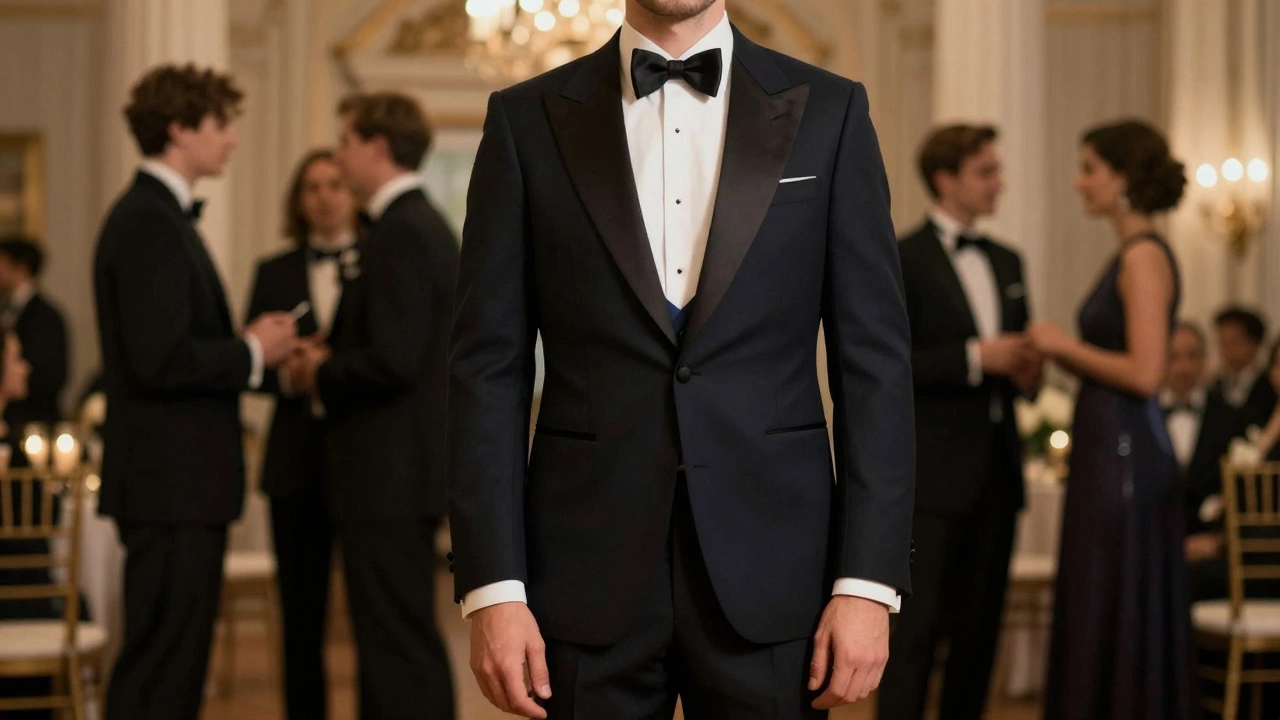
Black tie is what most people mean when they say ‘formal.’ It’s the wedding, the opera, the charity gala. The standard is a black tuxedo: single-breasted, peak or shawl lapel, satin facing. Pair it with a black bow tie (never clip-on), a white dress shirt with French cuffs and cufflinks, and black patent or highly polished oxfords. Socks? Black, wool, no pattern. No belt. A waistcoat or cummerbund is required, but not both. Choose one. Stick to black or midnight blue. White is for summer, and even then, only if the invitation says so.
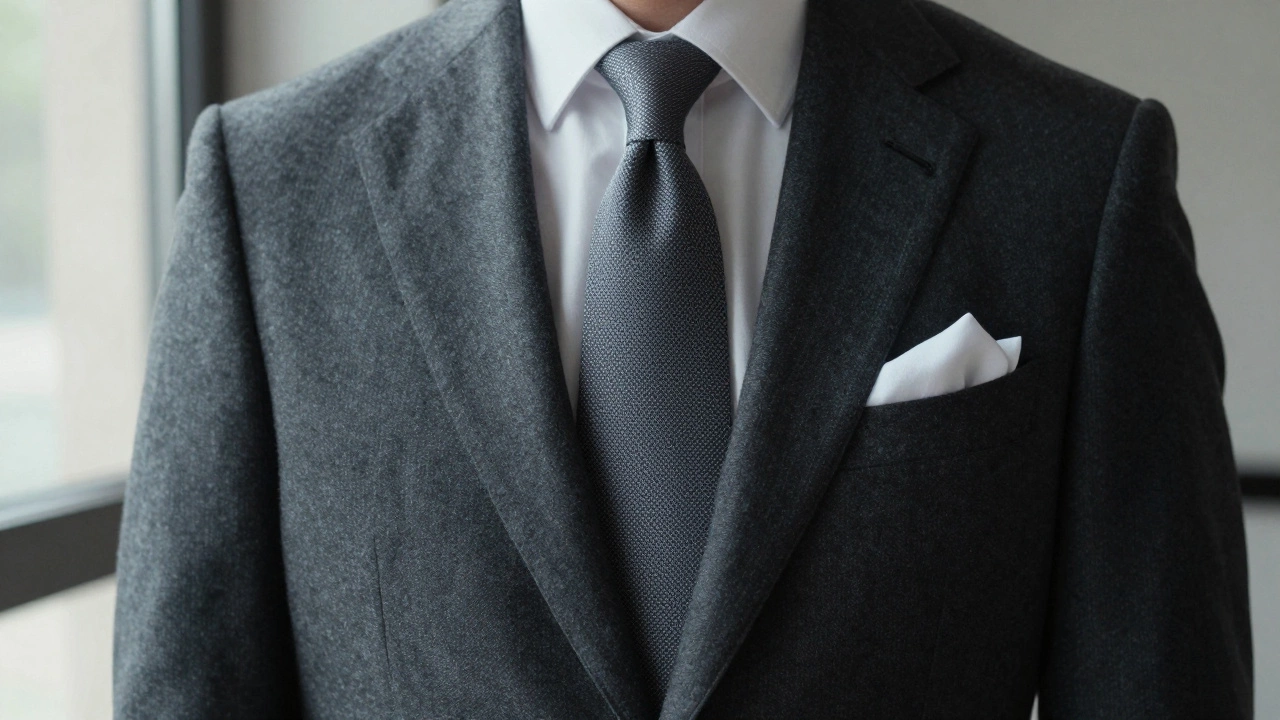
Business formal sits between the boardroom and the banquet hall. It’s the dress code for high-stakes meetings, court appearances, or formal dinners in a corporate setting. Here, a dark navy or charcoal suit works. Not black-unless it’s a funeral or a very specific request. A crisp white or light blue shirt, a silk tie in a solid or subtle pattern, and polished oxfords. No patterns on the tie unless they’re understated: microdots, repp stripes, or a muted paisley. Keep the pocket square white, folded in a simple puff. And never wear brown shoes with a dark suit. It’s a cardinal error.
The Details That Matter
A well-dressed man isn’t defined by the suit alone. It’s the silence between the notes. The fit. The fabric. The finish.Fit is everything. A jacket should sit flush across the shoulders-no pulling, no sagging. The sleeve should end just above your wrist, revealing a quarter inch of shirt cuff. The trousers should break once, lightly, over the top of your shoe. Too much fabric pooling? You look sloppy. Too short? You look like you borrowed it from your brother.
Fabric matters. Wool is king. For black tie, a wool-silk blend gives the lapel its subtle sheen. For business formal, a 100% wool in a worsted weave holds its shape through the day and breathes when you’re sitting in a heated room. Avoid polyester blends. They shine under light. They wrinkle. They look cheap, even if they cost a fortune.
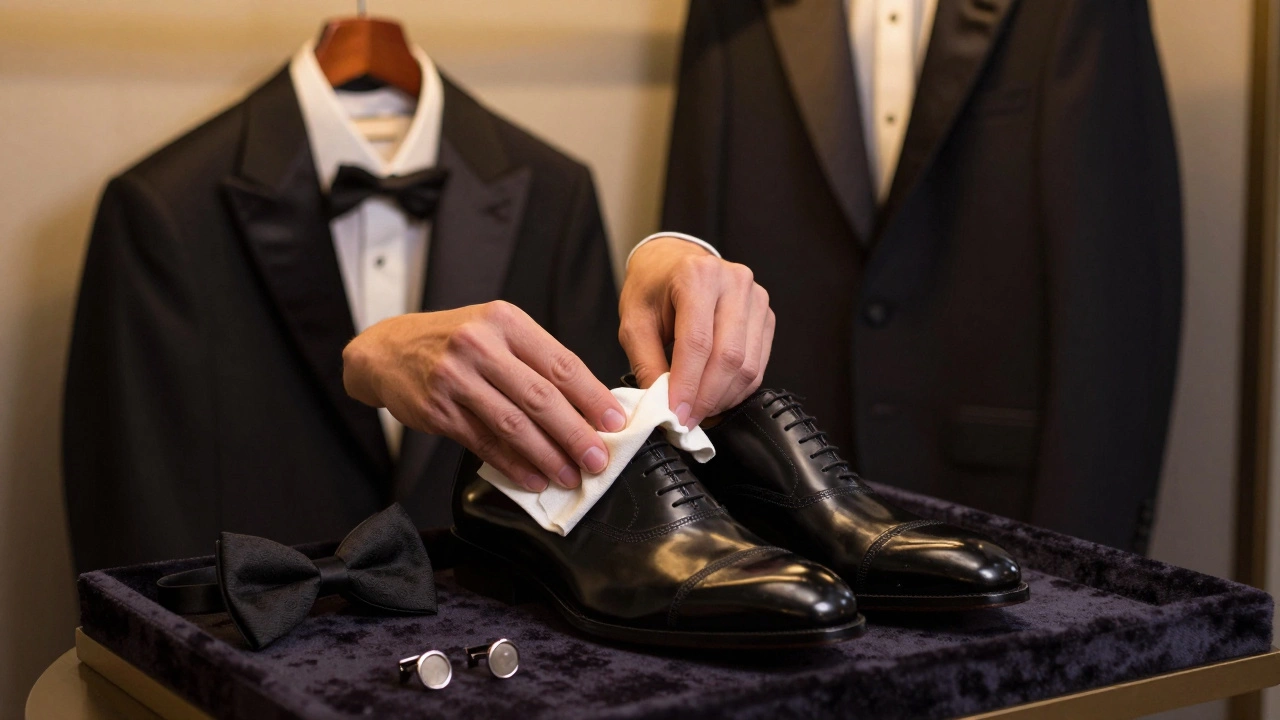
Shoes are your foundation. Polish them. Not just before the event. Every week. A soft cloth, a dab of cream, a few strokes. It’s not vanity. It’s discipline. A scuffed shoe breaks the entire look. And don’t wear loafers unless it’s a summer garden party. Even then, only if the invitation says so.
What Not to Do
There are mistakes that immediately mark you as someone who hasn’t done the work.- Don’t wear a tie clip unless you’re in the military or a very formal institution. It’s outdated and unnecessary.
- Don’t wear a pocket square that matches your tie. That’s a beginner’s trick. It looks like you’re trying too hard. Let it contrast-white linen with a navy suit, cream with charcoal.
- Don’t roll up your sleeves. Ever. Not even a little. It’s casual. It’s lazy.
- Don’t wear a watch with a leather strap to a black tie event. Stick to metal. A simple, elegant timepiece. No chronographs. No flashy dials.
- Don’t wear cologne like you’re trying to win a contest. One spritz, behind the ears. That’s it. If someone notices your scent, you’ve gone too far.
When in Doubt
You’re invited to an event. The invitation says ‘formal.’ What now?Look for clues. Is it held in a grand hall? A museum? A private club? Then err on the side of black tie. Is it a corporate dinner at a hotel? Business formal. Is it a wedding in June, outdoors, with lanterns and string lights? Black tie, but you can skip the cummerbund if the host is relaxed. Still, keep the tuxedo.
When in doubt, call the host. Not to ask if you can wear a suit instead of a tuxedo. Ask: ‘Is there anything I should be mindful of in terms of dress?’ That’s how a gentleman asks. He doesn’t assume. He doesn’t push boundaries. He seeks clarity.
The Philosophy Behind the Dress
Formal attire isn’t about showing off. It’s about disappearing into the right context. Like a fine wine served in the right glass-it enhances the experience without drawing attention to itself.When you dress properly, you remove distraction. Not just for others. For yourself. You stop wondering if you look right. You stop comparing yourself to the man in the next room. You simply are. And that’s the quiet power of true elegance.
It’s not about money. It’s about care. A well-tailored suit from a high-street tailor, worn with discipline, beats a designer suit tossed on without thought. It’s about consistency. About choosing to show up as the version of yourself you respect.
What to Own
You don’t need a closet full of formal wear. But you should own three key pieces:- A classic black tuxedo (single-breasted, peak lapel, satin trim). This is your anchor.
- A charcoal or navy suit in a fine wool. This covers 80% of formal business occasions.
- A pair of black patent oxfords and a pair of highly polished black calf oxfords. The first for black tie, the second for everything else.
Build from there. Add a white dress shirt with French cuffs. A set of simple silver cufflinks. A white linen pocket square. A silk black bow tie. That’s it. The rest is noise.
Final Thought
Formal attire is not a costume. It’s a language. And like any language, it’s learned through repetition, observation, and quiet correction. You don’t master it by reading a guide. You master it by wearing it-once, twice, a dozen times-until it becomes second nature.When you do, you’ll notice something: people don’t notice your clothes. They notice your presence. And that’s the only thing worth dressing for.
Is a black suit the same as a tuxedo?
No. A black suit is a dark suit with a standard lapel and buttons. A tuxedo has satin or grosgrain lapels, satin side stripes on the trousers, and is designed to be worn with a bow tie and cummerbund or waistcoat. Wearing a black suit to a black tie event is the most common mistake men make. It’s not formal-it’s a compromise.
Can I wear a white shirt with a black tie?
Yes, and you should. A crisp white dress shirt is the only correct choice for black tie. Avoid off-white, ivory, or textured fabrics. Stick to a standard spread or point collar with French cuffs. The shirt should feel stiff, not soft. It’s not about comfort-it’s about structure.
Do I need a cummerbund or waistcoat with a tuxedo?
Yes. One or the other, never both. A waistcoat is more traditional and offers a bit more warmth. A cummerbund is slightly more modern and better for warmer climates. Both serve the same purpose: to cover the waistband of the trousers and create a clean line from chest to hip. Skip it, and you break the silhouette.
Are patent leather shoes the only option for black tie?
They’re the standard, but not the only option. Highly polished black calf leather oxfords are acceptable if you don’t own patent shoes. Patent leather has a mirror finish and is the traditional choice because it reflects light subtly, matching the satin of the lapel. But if your shoes are impeccably polished, you won’t be out of place.
What if the event says ‘formal’ but I don’t have a tuxedo?
If it’s a wedding or gala, borrow or rent one. If it’s a corporate dinner, a dark navy suit with a silk tie and polished oxfords is appropriate. But never show up in a charcoal suit with a tie that has a pattern bigger than your thumb. When in doubt, call the host. A simple question shows more respect than a risky outfit.