
Informal Wear Checker
Check Your Informal Wardrobe
Determine if your pieces follow the principles of refined, effortless style.
Results
There’s a quiet confidence that comes from dressing well without trying too hard. It’s not about following trends or looking like you’re trying to impress. It’s about looking put-together, comfortable, and in control - even when you’re not in a suit. For men who value substance over spectacle, informal wear isn’t an afterthought. It’s the foundation of everyday elegance.
Defining Informal Wear - Not Just ‘Casual’
The term informal wear is often confused with casual. But casual implies looseness, even laziness. Informal wear is the opposite. It’s intentional simplicity. It’s the balance between comfort and refinement. Think of it as the middle ground between a tailored suit and a pair of sweatpants. You’re not dressing for a board meeting, but you’re not dressing for a gym session either.
Informal wear is what you wear when you’re meeting a colleague for coffee, picking up your kids from school, walking through the city on a Saturday morning, or hosting a quiet dinner at home. It’s the uniform of the man who knows his worth doesn’t need to be announced.
The Core Principles
Good informal wear follows three unspoken rules:
- Fit matters more than brand. A well-fitted cotton shirt, even if it’s from a high-street store, looks more expensive than a poorly tailored designer piece.
- Quality over quantity. Three well-chosen pieces outshine a closet full of impulse buys.
- Neutrals are your allies. Navy, charcoal, olive, cream, and stone don’t just match - they elevate.
These aren’t fashion rules. They’re principles of restraint. And restraint, in style as in life, is a sign of strength.
The Essential Pieces
Build your informal wardrobe around these five staples. Each one should be durable, versatile, and timeless.
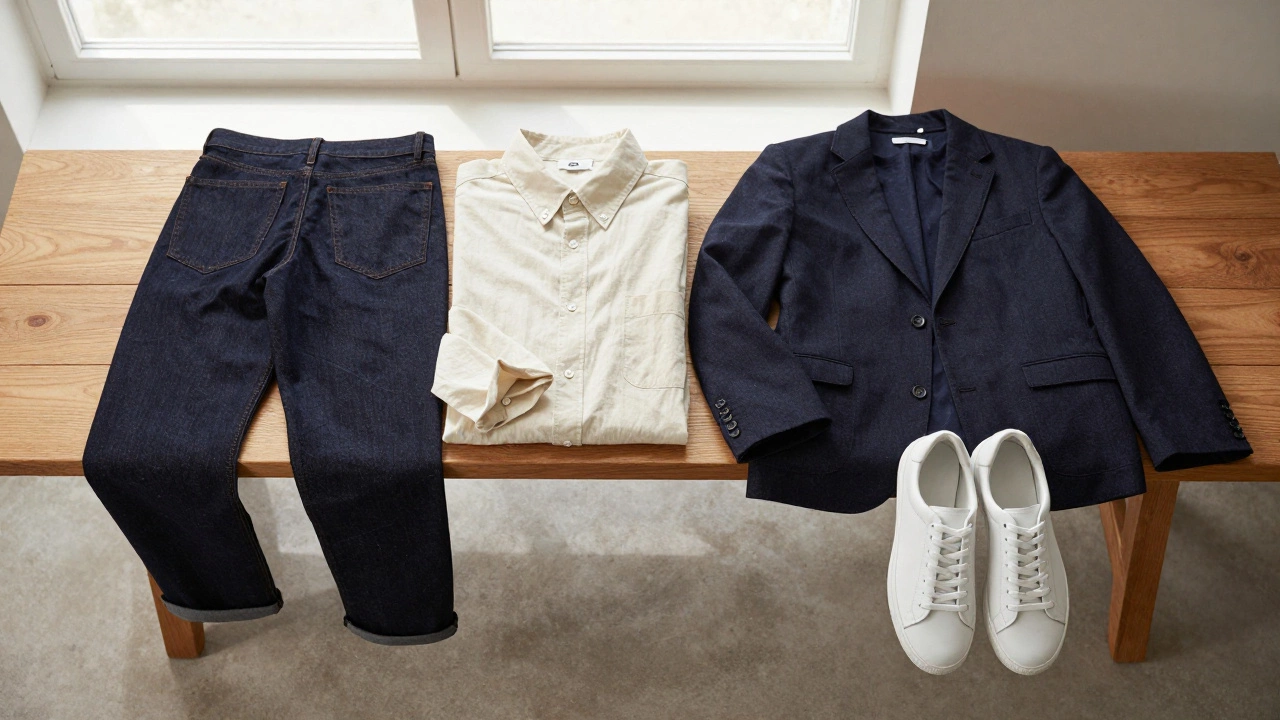
- Dark denim - Not black, not light blue. A deep indigo with a slight slub texture. It should fit snugly through the hips and taper slightly at the ankle. No rips. No excessive fading. Just clean, solid, and quietly confident.
- Cotton oxford or chambray shirt - Button-down collar, natural buttons (mother-of-pearl or horn), and a cut that allows for layering. Tuck it in for a sharper look, leave it out for relaxed ease. Both work.
- Unstructured blazer - In navy, charcoal, or olive. No padding. No lapel vents. Made from wool or linen-cotton blend. Wear it over a tee, a sweater, or a shirt. It instantly transforms a simple outfit into something thoughtful.
- Leather loafers or clean canvas sneakers - Loafers in brown or black suede. No laces. No logos. Or, if you prefer sportier, go for minimalist white sneakers - think Common Projects or Axel Arigato. Avoid bulky, branded athletic shoes.
- Soft wool or cotton sweater - A fine-gauge crewneck in grey, navy, or charcoal. Wear it under the blazer, or on its own with jeans. It adds depth without bulk.
These aren’t fashion items. They’re tools. Like a good pen or a well-balanced knife, they serve you quietly, reliably, and without fanfare.
What to Avoid
Informal wear isn’t about what you put on - it’s about what you leave off.
- Logos - Big brand names on shirts, jackets, or shoes scream insecurity. A small, discreet logo is acceptable. Anything larger is noise.
- Distressed denim - Rips, bleach spots, and exaggerated fading look like you tried too hard. The best jeans age naturally, not artificially.
- Track pants - Even the so-called ‘athleisure’ versions. They belong in the gym, not the sidewalk.
- Flip-flops - Unless you’re at the beach, they’re a step too far. Leather sandals are a better alternative for warm days.
- Over-layering - Three tops, a vest, and a jacket doesn’t look sophisticated. It looks confused. Less is more.
How to Layer - The Gentleman’s Approach
Layering isn’t about piling on. It’s about adding dimension.
Start with a slim-fit cotton tee. Add a fine-knit sweater. Then, drape the unstructured blazer over your shoulders - not fully buttoned, just resting. The contrast of textures - cotton, wool, and a touch of linen - creates quiet interest. No need for accessories. A simple watch, maybe a pair of understated cufflinks if you’re wearing a shirt without buttons, is enough.
This isn’t style. It’s presence.
Real-World Examples
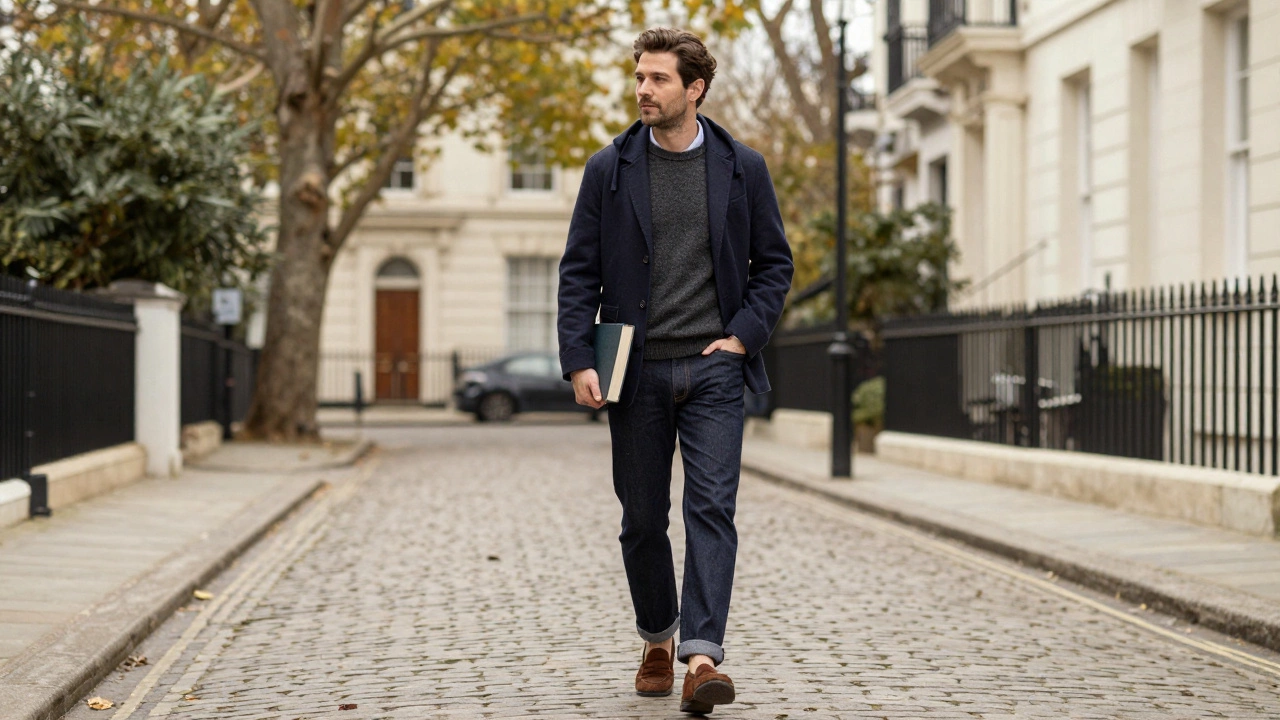
Picture this: You’re walking through a quiet part of Notting Hill on a Sunday morning. The air is cool. You’re wearing dark denim, a charcoal wool sweater, and a navy unstructured blazer. Your shoes are brown suede loafers. No bag. No headphones. Just your hands in your pockets, a book tucked under your arm.
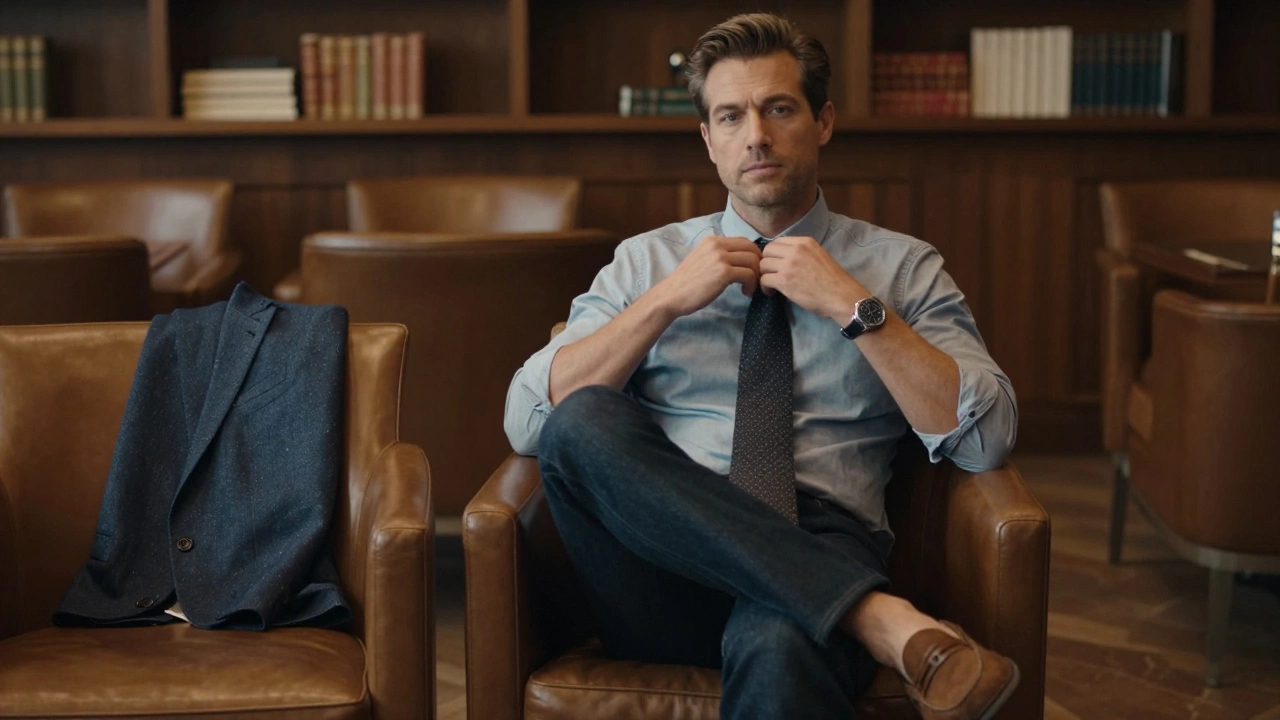
Or this: You’re meeting a client for lunch in a private members’ club. You’ve come straight from the office. You’ve swapped your tie for a simple knit, rolled up your sleeves, and left your coat behind. No one comments. But everyone notices.
That’s informal wear at its best. It doesn’t shout. It doesn’t compete. It simply belongs.
Seasonal Adjustments
Winter: Swap the cotton shirt for a thermal henley. Add a wool overcoat in camel or charcoal. Keep the loafers, but choose ones with a slight rubber sole for grip.
Summer: Lighten the fabric. Linen trousers in beige or oat. A short-sleeve oxford in white or pale blue. Sandals with leather straps, not plastic. A straw hat if you’re in the sun - but only if it’s well-shaped and not cartoonish.
The key is not to change your style with the seasons - but to adapt its texture.
Why This Matters
What you wear when you’re off-duty says more about you than your suit ever could. It reveals whether you value order, discipline, and quiet dignity. In a world full of noise, dressing with restraint is a form of resistance.
Informal wear isn’t about looking rich. It’s about looking like you have your life together. It’s about showing up, every day, as the man you’ve chosen to be - not the one you’re told to be.
It’s not about the clothes. It’s about the calm.
Is informal wear the same as smart casual?
They’re close, but not identical. Smart casual leans slightly more formal - think blazer with chinos and dress shoes. Informal wear is more relaxed: jeans, sweaters, loafers, and unstructured jackets. Smart casual is for dinners or meetings. Informal wear is for life.
Can I wear sneakers with a blazer?
Yes - but only if they’re minimalist, clean, and in neutral tones. White leather sneakers or low-profile suede ones work. Avoid athletic styles with bright colors, excessive branding, or chunky soles. The blazer should feel like a natural addition, not a contradiction.
What colors should I stick to?
Start with neutrals: navy, charcoal, olive, cream, stone, and black. These colors work together without competing. Once you’re comfortable, introduce one subtle accent - a deep burgundy sweater, a taupe coat, or a muted green shirt. But never more than one.
Do I need to buy expensive brands?
No. What matters is cut, fabric, and durability. Many high-street brands offer excellent quality at reasonable prices. Look for natural fibers - cotton, wool, linen - and check the stitching. A well-made shirt from a lesser-known brand will outlast a logo-heavy one.
How many pieces should I own?
You don’t need a lot. Start with: two pairs of dark denim, three shirts (one oxford, one chambray, one thermal), one unstructured blazer, one sweater, and two pairs of shoes (loafers and clean sneakers). That’s enough for a full week. Rotate them. Let them breathe. Quality lasts longer than quantity.
Style isn’t about keeping up. It’s about standing still - with grace.