

The Modern Gentleman Self-Assessment
Are you a true gentleman in the modern age? This assessment moves beyond birthright and focuses on action, integrity, and empathy. Answer honestly to receive your profile.
Score: 0/15 (Based on Integrity, EQ, Etiquette, Style)
Walk into any high-end bar in London or New York, and you will see men in suits who look the part but lack the substance. They hold doors open with one hand while checking their phone with the other. They speak loudly enough to dominate the room but rarely listen. This disconnect between appearance and behavior is why the question what is meant to be a gentleman has become so urgent in our current era. We have plenty of men who dress well; we have fewer who carry themselves with genuine integrity.
The term "gentleman" often feels archaic, trapped in the amber of Victorian novels and stiff collars. Yet, at its core, it describes something timeless: a man who prioritizes the comfort and dignity of others alongside his own. It is not about your bank account, your lineage, or whether you know which fork to use for the salad course. It is about how you navigate the world when no one is watching. Being a gentleman is an active practice, a daily commitment to refinement that extends far beyond your wardrobe.
The Historical Shift from Status to Character
To understand what we mean today, we must briefly look at where the idea came from. Historically, being a gentleman was a birthright. You were born into land ownership, titles, and specific social privileges. The word itself derives from the Old French gentilhomme, meaning "well-born." For centuries, if you had the right parents, you were automatically granted this status, regardless of your personal conduct.
This changed during the Enlightenment and accelerated through the 19th century. Thinkers like John Locke and later Samuel Smiles began arguing that true gentility was earned through education, moral fortitude, and service to society, not just bloodline. The concept shifted from "who you are" to "how you act." By the early 20th century, the ideal gentleman was defined by his code of honor-his word was his bond, and his actions reflected his internal compass.
In 2026, we live in the final stage of this evolution. Social hierarchy is fluid. You can meet a CEO and a plumber at the same dinner party. In this context, the label of gentleman is entirely voluntary. It is a badge you wear because you choose to uphold certain standards, not because society forces you to. This makes it more meaningful than ever. When a man chooses to be courteous in a rude world, he is making a statement about his values.
| Era | Basis of Status | Primary Focus | Key Attribute |
|---|---|---|---|
| Medieval/Early Modern | Birth & Land Ownership | Privilege & Power | Aristocratic Lineage |
| Victorian Era | Wealth & Education | Manners & Etiquette | Public Respectability |
| Modern Era (2026) | Action & Integrity | Character & Empathy | Self-Discipline |
Integrity: The Silent Foundation
If manners are the surface, integrity is the bedrock. A gentleman does not lie to save face, nor does he exaggerate his achievements to impress strangers. In a professional setting, this looks like admitting a mistake before your boss finds it. It means delivering on promises even when it becomes inconvenient. If you say you will send an email by 5 PM, it arrives by 5 PM. If you commit to a deadline, you meet it.
This consistency builds trust, which is the currency of modern life. People do not follow leaders because they are charming; they follow them because they are reliable. Consider the difference between two colleagues. One is witty and flashy but frequently late and forgetful. The other is quiet, punctual, and finishes what he starts. Who would you trust with a critical project? The latter embodies the gentleman’s ethic. He understands that his time is valuable, but so is everyone else’s.
Integrity also applies to how you treat those who cannot help you. How do you speak to the waiter who brought the wrong wine? Do you snap your fingers, or do you politely ask for correction? A true gentleman respects the role, not just the person’s utility. He recognizes that dignity is inherent in every human being, regardless of their job title or socioeconomic status.
Emotional Intelligence and Composure
Gone are the days when stoicism meant suppressing all emotion until you exploded. Today, being a gentleman requires high emotional intelligence (EQ). It is the ability to read a room, understand non-verbal cues, and respond appropriately rather than react impulsively. When someone insults you, the unrefined man retaliates immediately. The gentleman pauses. He assesses whether the comment warrants a response or if silence is the stronger answer.
Composure is attractive because it signals safety. In a crisis-a missed flight, a spilled drink, a business failure-the gentleman remains calm. He focuses on solutions, not blame. This does not mean he lacks passion or anger. It means he channels those emotions constructively. He knows that losing his temper gives away his power. By maintaining his cool, he allows others to feel secure in his presence.
This extends to listening. Most people listen with the intent to reply. A gentleman listens with the intent to understand. He asks questions that show he is engaged. He puts his phone away during conversation. He maintains eye contact without staring. These small acts of attention make the person across from him feel valued. In a digital age where attention is fragmented, giving someone your full focus is a rare gift.
Style as a Form of Respect
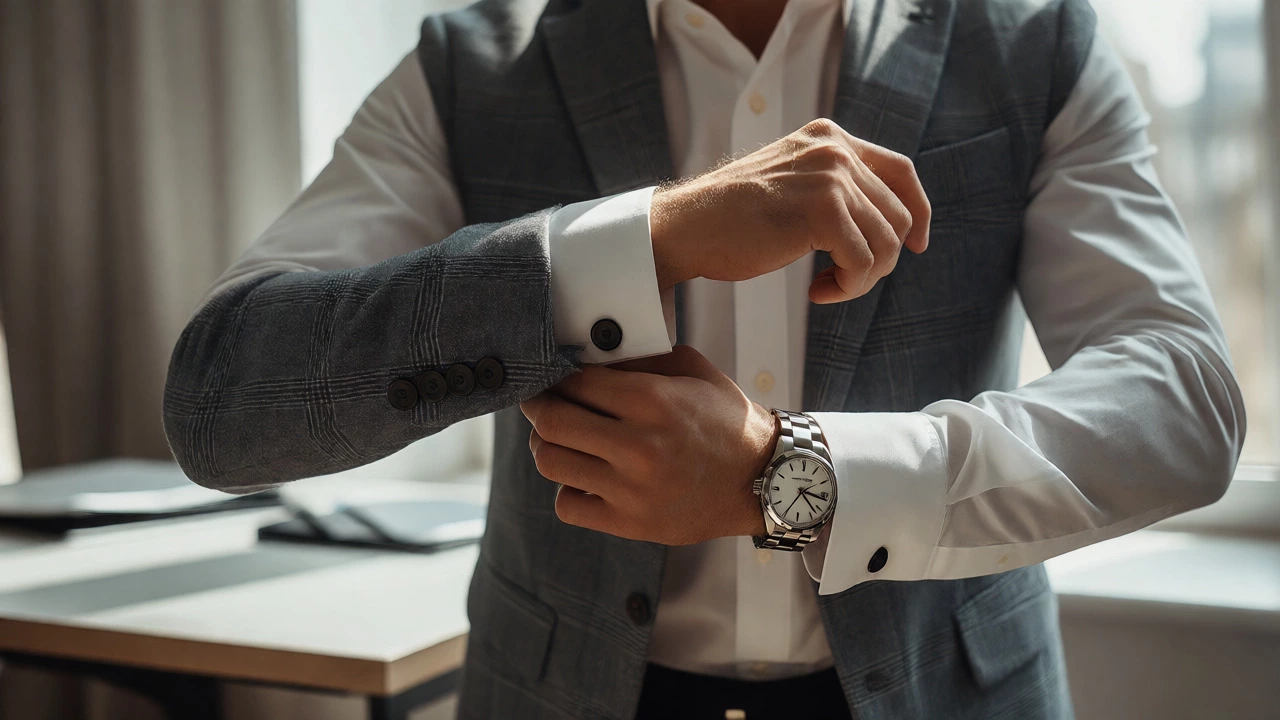
You might wonder where clothing fits into this moral framework. Style is not vanity; it is communication. What you wear tells the world how much effort you put into showing up. Dressing well is a form of respect for yourself and for the occasion. When you wear a tailored suit to a wedding, you are saying, "This event matters to me, and I want to honor it." When you groom yourself neatly for a work meeting, you signal professionalism and self-respect.
However, style rules have relaxed. You do not need a three-piece suit to be a gentleman. A clean, well-fitting t-shirt and jeans can be perfectly appropriate if worn with confidence and care. The key is intentionality. Are your clothes clean? Do they fit your body properly? Is your grooming maintained? A gentleman ensures he looks presentable because he understands that visual presentation is the first thing people notice.
Consider the details. Polished shoes suggest attention to detail. A fresh haircut implies discipline. Even your scent matters-subtle cologne, never overpowering. These elements combine to create an impression of competence. When you look sharp, you often feel sharper, which boosts your confidence and changes how you interact with others. It is a positive feedback loop.
Practical Etiquette in the Digital Age
Traditional etiquette books focused on ballrooms and dinner tables. Modern etiquette must address screens and notifications. Here are some contemporary rules for the discerning man:
- The Phone Rule: Never place your phone on the table during a meal unless you are expecting an emergency call. Better yet, keep it in your pocket. Checking messages mid-conversation says, "You are less important than my screen."
- Digital Correspondence: Reply to emails within 24 hours, even if only to acknowledge receipt. Use clear subject lines. Avoid writing in all caps, which reads as shouting. Proofread before sending; typos signal carelessness.
- Social Media Conduct: Do not air grievances publicly. Keep complaints private and constructive. Share content that adds value or insight, not just noise. Remember that your online footprint is permanent.
- Door Holding: Hold the door for anyone following you, regardless of gender. It is a simple act of consideration that costs nothing but yields significant goodwill.
- Table Manners: Chew with your mouth closed. Wait for everyone to be served before eating. Keep your elbows off the table. These basics remain universal markers of upbringing and awareness.
These rules are not arbitrary restrictions. They are tools to reduce friction in social interactions. When everyone follows basic etiquette, conversations flow smoother, meals are more enjoyable, and misunderstandings decrease. By adhering to these norms, you facilitate comfort for those around you.

The Gentleman’s Responsibility to Others
Finally, a gentleman recognizes his privilege and uses it responsibly. This does not mean carrying guilt, but acknowledging opportunity. If you have the resources, mentor someone younger. If you have influence, use it to advocate for fairness. If you see injustice, speak up, even if your voice shakes.
Service is central to the gentleman’s identity. This could mean volunteering time, supporting local businesses, or simply helping a neighbor carry groceries. It is an outward-facing mindset. Instead of asking, "What can I get?", he asks, "What can I give?" This shift in perspective transforms daily interactions from transactions into connections.
Moreover, a gentleman protects the reputation of others. He does not gossip maliciously. If he hears a rumor, he verifies it before repeating it. He speaks well of absent friends. This loyalty creates a network of trust. People know that if you speak kindly of them behind their backs, you likely mean it to their faces.
Conclusion: An Ongoing Practice
Being a gentleman is not a destination you reach once and then rest. It is a continuous process of refinement. You will stumble. You will lose your patience. You will forget a name or spill coffee on your shirt. That is human. The goal is not perfection, but progress. Each day offers a new chance to practice courtesy, honesty, and style.
Start small. Choose one area to improve this week. Maybe it is putting your phone away during dinner. Maybe it is dressing slightly better for work. Maybe it is listening more carefully in meetings. Over time, these habits compound. They shape your character and define how the world perceives you. Ultimately, what it means to be a gentleman is to strive to be the best version of yourself, for the benefit of yourself and those around you.
Is being a gentleman outdated?
No, the core principles of respect, integrity, and self-discipline are timeless. While specific etiquette rules may evolve, the desire for trustworthy and considerate men remains strong in both personal and professional spheres.
Do I need expensive clothes to be a gentleman?
Absolutely not. Fit and cleanliness matter more than brand names. A well-fitted, clean outfit from a budget store shows more respect than an ill-fitting designer suit. Style is about intention, not price tags.
How do I handle conflict as a gentleman?
Stay calm, listen actively, and address the issue respectfully without attacking the person's character. Focus on finding a solution rather than winning the argument. Maintain composure even when provoked.
Can women be gentlemen?
Yes. While the term historically referred to men, the qualities of chivalry, courtesy, and integrity are gender-neutral. Many women embody these traits fully and are often described as having 'gentlemanly' character.
What is the most common mistake men make regarding etiquette?
Ignoring digital etiquette. Using phones during face-to-face conversations, sending sloppy emails, or oversharing on social media are frequent breaches of modern courtesy that undermine perceived professionalism.