

Mental Resilience Simulator
Loading scenario...
Analysis
Explanation goes here.
Resilience Assessment Complete
Your Mental Architecture Score:
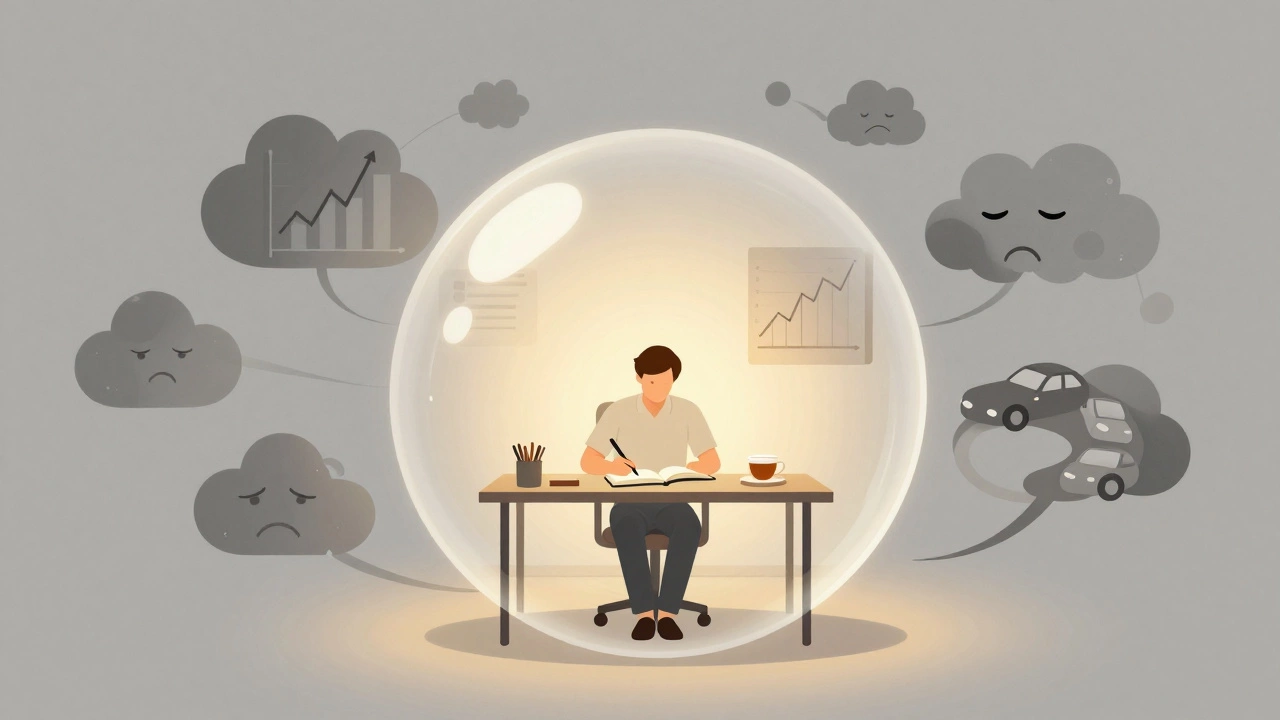
There is a quiet power in remaining composed when the world around you is chaotic. We often mistake strength for volume-loud opinions, aggressive posturing, or an unyielding stubbornness. But true strength, the kind that sustains a man through decades of professional and personal challenges, is far more subtle. It is not about being hard; it is about being resilient. So, what is the strongest mindset? It is not a single trait, but a composite architecture of thought built on self-awareness, adaptability, and purpose.
In my years observing the habits of successful men, from CEOs in London’s financial district to artisans crafting bespoke goods in small workshops, one pattern emerges consistently. The strongest mindset is not defined by how well you handle success, but by how gracefully you navigate failure, ambiguity, and stress. It is a deliberate choice to remain the captain of your own ship, regardless of the storm.
The Foundation: Emotional Intelligence Over Ego
Many men are taught early on to suppress emotion, viewing vulnerability as a weakness. This is a profound error. The strongest mindset begins with high Emotional Intelligence, or EQ. This is the ability to recognize, understand, and manage your own emotions, while also recognizing the emotions of others.
Consider a scenario common in any high-stakes environment: a project fails, or a client rejects a proposal. The reactive response is anger, blame, or defensiveness. These reactions protect the ego but damage relationships and cloud judgment. The resilient response is different. It involves pausing, acknowledging the disappointment, and then asking, "What can I learn from this?" This shift from reaction to reflection is the cornerstone of mental fortitude.
EQ allows you to detach your self-worth from immediate outcomes. You are not your job title, your bank balance, or your latest mistake. When you separate your identity from external validation, you become immune to the fluctuations of fortune. This stability is attractive, reliable, and deeply respected by peers and partners alike.
- Self-Awareness: Recognizing your triggers before they trigger you.
- Self-Regulation: Choosing your response rather than letting impulse dictate action.
- Empathy: Understanding that others have their own battles, which fosters better collaboration.
- Social Skills: Navigating complex interpersonal dynamics with grace and firmness.
The Stoic Framework: Control What You Can
If Emotional Intelligence is the foundation, Stoicism provides the structural framework. Stoicism is not about suppressing feelings; it is about distinguishing between what is within your control and what is not. This ancient philosophy, practiced by emperors and slaves alike, remains remarkably relevant for the modern gentleman.
We waste an enormous amount of energy worrying about things we cannot change: the economy, the opinions of critics, traffic jams, or past mistakes. The strongest mindset accepts these realities without resistance. Resistance creates suffering. Acceptance creates clarity.
When you focus exclusively on your actions, your character, and your responses, you reclaim your power. For example, you cannot control whether you get promoted, but you can control the quality of your work and your professionalism. You cannot control the weather, but you can control whether you carry an umbrella. This dichotomy of control simplifies life. It reduces anxiety because it narrows your focus to what actually matters: your conduct.
Practicing this daily requires discipline. Start each morning by identifying potential obstacles and deciding how you will respond to them calmly. End each evening by reviewing your day, noting where you reacted emotionally and where you responded rationally. Over time, this practice rewires your brain to default to calmness under pressure.
Growth Orientation: Embracing the Journey
A fixed mindset believes that abilities are static-you are either smart or dumb, talented or untalented. A growth mindset, popularized by psychologist Carol Dweck, posits that abilities can be developed through dedication and hard work. The strongest mindset is inherently a growth mindset.
This perspective transforms failure from a verdict into feedback. Instead of thinking, "I failed, so I am a failure," you think, "I failed, so I need to adjust my approach." This subtle linguistic shift changes everything. It encourages experimentation, learning, and continuous improvement.
In the context of career and personal development, this means seeking out challenges rather than avoiding them. It means reading books outside your comfort zone, taking courses in unfamiliar fields, and soliciting honest criticism from mentors. The goal is not to be perfect; the goal is to be better today than you were yesterday.
Consider the physical analogy of weightlifting. Muscles grow only when subjected to stress and then allowed to recover. Similarly, the mind grows only when subjected to intellectual and emotional challenges. Without friction, there is no progress. The strongest mindset welcomes friction as the mechanism of growth.
| Scenario | Fixed Mindset Response | Growth Mindset Response |
|---|---|---|
| Criticism received | Defensive, dismissive | Curious, analytical |
| Failure experienced | Shame, avoidance | Learning, adaptation |
| Success achieved | Arrogance, rest | Gratitude, new goals |
| New challenge | Fear, hesitation | Excitement, preparation |
Purpose-Driven Action: Beyond Hedonism
Hedonism-the pursuit of pleasure-is a fleeting driver. It works until it doesn’t. The strongest mindset is anchored in purpose. Purpose is not necessarily a grand, world-changing mission. It is simply a clear sense of why you do what you do. It could be providing for your family, mastering a craft, contributing to your community, or building a legacy.
When your actions are aligned with a deeper purpose, mundane tasks become meaningful. Early mornings, difficult conversations, and rigorous training lose their sting because they serve a larger narrative. Purpose provides endurance. It allows you to endure short-term discomfort for long-term gain.
To cultivate purpose, ask yourself: What values do I want to embody? How do I want to be remembered? What contributions do I want to make? Write these down. Revisit them regularly. Let them guide your decisions. When faced with a choice between ease and difficulty, choose the path that aligns with your purpose. This consistency builds integrity, and integrity builds trust.
Adaptability: The Art of Fluidity
Rigidity breaks. Flexibility bends. The strongest mindset is adaptable. In a rapidly changing world-technologically, economically, socially-the ability to pivot is crucial. This does not mean lacking principles; it means having flexible strategies.
Think of water. It takes the shape of its container but retains its essence. It flows around obstacles rather than crashing against them. This fluidity allows you to navigate uncertainty with grace. When plans fall apart, you do not despair; you reassess and redirect.
Practical adaptability involves continuous learning and openness to new perspectives. It requires humility-the recognition that you do not have all the answers. It means listening more than you speak, especially in times of crisis. By staying curious and open, you remain relevant and resilient.
In your professional life, this might mean learning new software tools, adapting to remote work cultures, or understanding emerging market trends. In your personal life, it might mean adjusting expectations in relationships or embracing new hobbies as you age. Adaptability is not surrender; it is strategic evolution.

Building Your Mental Architecture
Developing the strongest mindset is not a one-time event; it is a lifelong practice. It requires intentionality and effort. Here are practical steps to begin building this mental architecture today.
- Morning Routine: Start your day with clarity. Spend ten minutes meditating, journaling, or planning. Set intentions for the day. Avoid checking your phone immediately upon waking.
- Physical Discipline: Exercise regularly. Physical health directly impacts mental resilience. Strength training, cardio, and flexibility exercises boost endorphins and reduce stress.
- Continuous Education: Read widely. Engage with ideas that challenge your worldview. Listen to podcasts, attend lectures, and seek mentorship.
- Digital Detox: Limit social media consumption. Curate your inputs. Unfollow accounts that provoke envy or anxiety. Protect your attention span.
- Reflective Practice: End each day with reflection. What went well? What could be improved? What did you learn? This habit accelerates growth.
- Community Engagement: Surround yourself with people who share your values. Build deep, meaningful relationships. Isolation erodes resilience.
Remember, consistency beats intensity. Small, daily actions compound over time. Do not expect overnight transformation. Trust the process. Be patient with yourself. Celebrate small victories. Acknowledge setbacks without judgment. Keep moving forward.
The Gentleman’s Code: Integrity and Respect
Finally, the strongest mindset is grounded in integrity and respect. It is easy to be strong when you are alone. It is harder to be strong when others are watching. True strength is demonstrated in how you treat those who can do nothing for you. It is shown in keeping your promises, admitting your mistakes, and standing up for what is right, even when it is unpopular.
A gentleman does not need to prove his strength. His actions speak for themselves. He listens actively. He speaks kindly. He acts decisively. He forgives readily. He holds boundaries firmly. This combination of softness and steel is the hallmark of mature masculinity.
In a world that often rewards aggression and noise, choose quiet confidence. Choose depth over breadth. Choose substance over style. The strongest mindset is not about dominating others; it is about mastering yourself. And in that mastery, you find peace, purpose, and power.
Is the strongest mindset innate or learned?
While some personality traits may be innate, the strongest mindset is largely learned and cultivated through practice. Emotional intelligence, stoic reasoning, and growth orientation are skills that improve with deliberate effort and experience.
How can I develop emotional intelligence quickly?
Start by practicing active listening. Pay attention to your body’s physical responses during stressful situations. Journal your emotions to identify patterns. Seek feedback from trusted friends or mentors about your interpersonal interactions.
What is the difference between stoicism and suppression?
Suppression involves ignoring or denying emotions, which can lead to psychological issues. Stoicism acknowledges emotions but chooses not to be controlled by them. It focuses on rational response and acceptance of reality.
Can a growth mindset help in career advancement?
Yes. A growth mindset encourages continuous learning and resilience in the face of setbacks. Employers value individuals who adapt quickly, seek feedback, and view challenges as opportunities for development.
How does purpose influence daily decision-making?
Purpose acts as a filter for decisions. When faced with choices, ask which option aligns with your core values and long-term goals. This reduces indecision and ensures consistent action toward meaningful outcomes.
Why is adaptability important for modern men?
The modern world is characterized by rapid change in technology, economics, and social norms. Adaptability allows men to navigate uncertainty, seize new opportunities, and maintain relevance in evolving environments.
What role does physical health play in mental resilience?
Physical health directly impacts mental state. Regular exercise reduces stress hormones, improves sleep quality, and boosts mood-regulating neurotransmitters. A strong body supports a strong mind.
How can I maintain composure under extreme pressure?
Practice mindfulness and breathing techniques. Focus on the present moment rather than hypothetical worst-case scenarios. Remind yourself of past successes in handling stress. Break problems into manageable steps.