

Relationship Health Assessment Tool
Your Relationship Health Score
Loading your personalized assessment...
Strengths Identified
Areas for Growth
Personalized Recommendations
It is a quiet truth that few men admit out loud: despite our success in the boardroom or our mastery of personal style, navigating the complexities of intimate relationships often feels like walking through fog. You have read the books, you have attended the workshops, and perhaps you have even sought counsel, yet the friction remains. Why do connections that should bring clarity instead bring confusion? Why does the very thing we crave-deep, authentic partnership-feel so elusive?
The answer is rarely as simple as "bad luck" or "the wrong person." For the modern gentleman, understanding why relationships are difficult requires looking inward with unflinching honesty. It demands an examination of how we were raised, how we communicate, and whether we are seeking a partner to complete us or to complement us. This is not about blaming women or excusing poor behavior; it is about taking ownership of your role in the dynamic.
The Architecture of Expectation
Many relationship struggles begin before two people ever meet. They start in the blueprint of what you believe a relationship should be. Often, this blueprint is drawn from outdated cultural scripts or idealized media narratives. You might expect a partner to intuitively understand your needs without you having to speak them. You might assume that love alone will sustain a connection through periods of silence, disagreement, or personal growth.
Unrealistic expectations are invisible barriers that prevent genuine intimacy by setting standards no human can consistently meet. When reality fails to match the fantasy, disappointment follows. The gentleman understands that a partner is a separate individual with their own history, triggers, and limitations. They are not a project to be fixed, nor a mirror to reflect only your best self. Accepting this reality is the first step toward reducing friction.
- The Savior Complex: Believing you must "fix" your partner’s past traumas or insecurities.
- The Mind-Reader Fallacy: Assuming your partner should know what you want without clear communication.
- The Perfection Trap: Expecting constant harmony and ignoring the value of healthy conflict.
The Silence of Emotional Literacy
For generations, men were taught that stoicism was strength. To feel deeply was to be vulnerable; to express vulnerability was to be weak. While resilience is a virtue, emotional suppression is a liability in relationships. If you cannot name your own emotions, how can you navigate yours? How can you respond to your partner’s distress if your default setting is to retreat into silence or logic?
Emotional intelligence is the ability to recognize, understand, and manage one's own emotions while empathizing with others. This is not about being overly expressive or dramatic. It is about precision. It is the difference between saying, "I’m fine," when you are seething with resentment, and saying, "I felt overlooked when our plans changed last minute. I need some reassurance." The latter invites connection; the former invites distance.
Consider the scene: you come home after a grueling day at work. Your partner asks, "How was your day?" You shrug and say, "Fine." The conversation dies. Later, tension builds because you both feel disconnected. Now, imagine a different response: "It was tough. I had a conflict with a client that drained me. I just need twenty minutes to decompress, then I’d love to hear about yours." This small shift transforms a moment of potential disconnection into an opportunity for support.
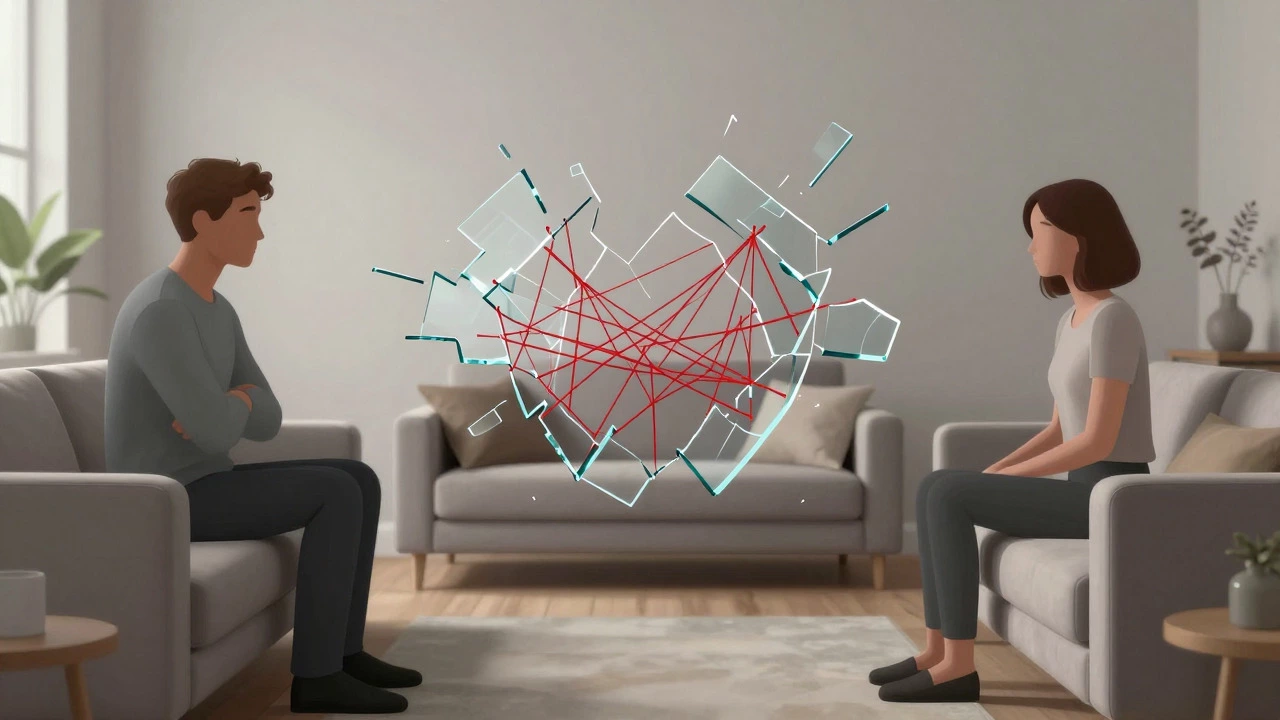
The Paradox of Independence
Modern masculinity prizes independence. We are encouraged to build careers, secure finances, and cultivate hobbies that define us individually. This is commendable. However, when carried too far, independence becomes isolation. In a relationship, total self-sufficiency can signal a lack of investment. If you never rely on your partner, they may wonder if they are truly needed.
This is the paradox: the strongest relationships are built by two strong individuals who choose to interlock their lives. It requires the courage to let someone else hold weight. It means admitting when you are tired, when you are unsure, or when you need guidance. Vulnerability is not weakness; it is the ultimate act of trust. Without it, you remain a guest in each other’s lives, rather than a co-author of a shared story.
| Trait | Hyper-Independence | Healthy Interdependence |
|---|---|---|
| Decision Making | Solo decisions, minimal consultation | Shared goals, collaborative choices |
| Emotional Support | Self-soothing only, avoids burdening others | Offers and receives support openly |
| Conflict Resolution | Avoids conflict to maintain autonomy | Engages in conflict to deepen understanding |
| Identity | Rigidly defined by self | Flexible, includes "we" alongside "I" |
Communication: The Art of Listening
We often mistake talking for communicating. We prepare our rebuttals while our partner is still speaking. We listen to respond, not to understand. True listening is an active, disciplined practice. It involves putting down the phone, making eye contact, and suspending judgment.
When your partner expresses frustration, your instinct might be to solve the problem immediately. But often, what they seek is validation, not a solution. Try this framework: Reflect, Validate, Then Respond. Reflect back what you heard ("So, you’re feeling stressed because..."), validate their emotion ("That sounds incredibly frustrating"), and only then offer your perspective or assistance. This approach de-escalates tension and builds trust.
Furthermore, pay attention to non-verbal cues. A crossed arm, a sigh, or a change in tone can carry more weight than words. As a gentleman, you are trained to observe details-in tailoring, in wine, in architecture. Apply that same attentiveness to your partner’s demeanor. Small shifts in mood are data points, not annoyances.

The Erosion of Effort Over Time
In the early stages of dating, effort is abundant. You plan dates, you dress well, you engage in deep conversations. Over time, comfort sets in. And with comfort comes complacency. You stop asking questions. You stop surprising them. You assume the relationship is on autopilot.
Relationships are not static entities; they are living things that require tending. Neglect is slow poison. The gentleman understands that romance is not just a phase but a practice. It is showing up, day after day, with intention. It is remembering the small details-the way they take their coffee, the book they mentioned wanting to read, the anniversary of a significant life event.
Effort does not mean grand gestures. It means consistency. It means choosing your partner every morning, even when it is inconvenient. It means prioritizing quality time over passive coexistence. When you invest in the relationship, you signal its value. When you withdraw, you signal indifference.
Rebuilding the Foundation
If you find yourself struggling, do not despair. Awareness is the precursor to change. Start by examining your own patterns. Where do you shut down? Where do you react defensively? Seek feedback from trusted friends or a therapist. Therapy is not a sign of failure; it is a tool for refinement, much like hiring a coach for your career.
Practice radical honesty. Tell your partner what you need. Ask them what they need. Create rituals of connection-a weekly walk, a monthly dinner date, a nightly check-in. These structures provide stability amidst the chaos of life. They remind you both that the relationship is a priority, not an afterthought.
Finally, remember that difficulty is not failure. Friction generates heat, and heat can forge stronger bonds. The goal is not a perfect relationship, but a resilient one. One where both partners are committed to growing together, even when the path is steep.
Is it normal to struggle in a long-term relationship?
Yes, absolutely. Struggle is a natural part of any deep human connection. As individuals grow and change, the relationship must adapt. Periods of difficulty often signal opportunities for deeper understanding and renewed commitment, provided both partners are willing to engage constructively.
How can I improve my emotional intelligence?
Start by labeling your emotions daily. Keep a journal to track triggers and reactions. Practice active listening in low-stakes conversations. Read literature that explores complex human experiences. Consider working with a therapist to uncover blind spots in your emotional processing.
What is the difference between independence and interdependence?
Independence is the ability to function alone, while interdependence is the choice to rely on and support another person while maintaining your own identity. Healthy relationships thrive on interdependence, where partners share burdens and joys without losing their sense of self.
Why do I shut down during arguments?
Shutting down, or stonewalling, is often a defense mechanism triggered by feeling overwhelmed or criticized. It may stem from childhood experiences where conflict was dangerous or chaotic. Recognizing this pattern is the first step. Practice taking breaks during heated moments and returning to the conversation when calm.
How important is physical affection in maintaining a relationship?
Physical affection releases oxytocin, the bonding hormone, which reduces stress and increases feelings of closeness. Regular touch, from holding hands to hugging, maintains a physical connection that supports emotional intimacy. It is a vital component of a healthy relationship ecosystem.
Can a relationship survive if we have different core values?
While differences in interests are healthy, divergent core values (such as views on family, finance, or integrity) can create fundamental incompatibility. Minor value differences can be navigated with respect, but major misalignments often lead to persistent conflict. Honest assessment early on is crucial.